
Itinerary
Itinerary
In the Footsteps of the Impressionists in Provence: From the Impressionist Legacy to the Birth of Modern Art


From the reflections of the Sorgue to the landscapes of Saint-Rémy and on to Mont Sainte-Victoire, this itinerary traces the evolution of the artistic gaze in Provence.
The journey begins with light and water, two motifs dear to the Impressionists. It then continues through the Alpilles, where Van Gogh gave colour a new intensity, before reaching Aix-en-Provence, where Cézanne constructed the landscape through form and volume.
Three days to understand how the legacy of Impressionism paved the way for modern painting.
This itinerary is provided as an example and can be fully tailored to your preferences. All services are available to book upon request.
Day 1: Light on the Water
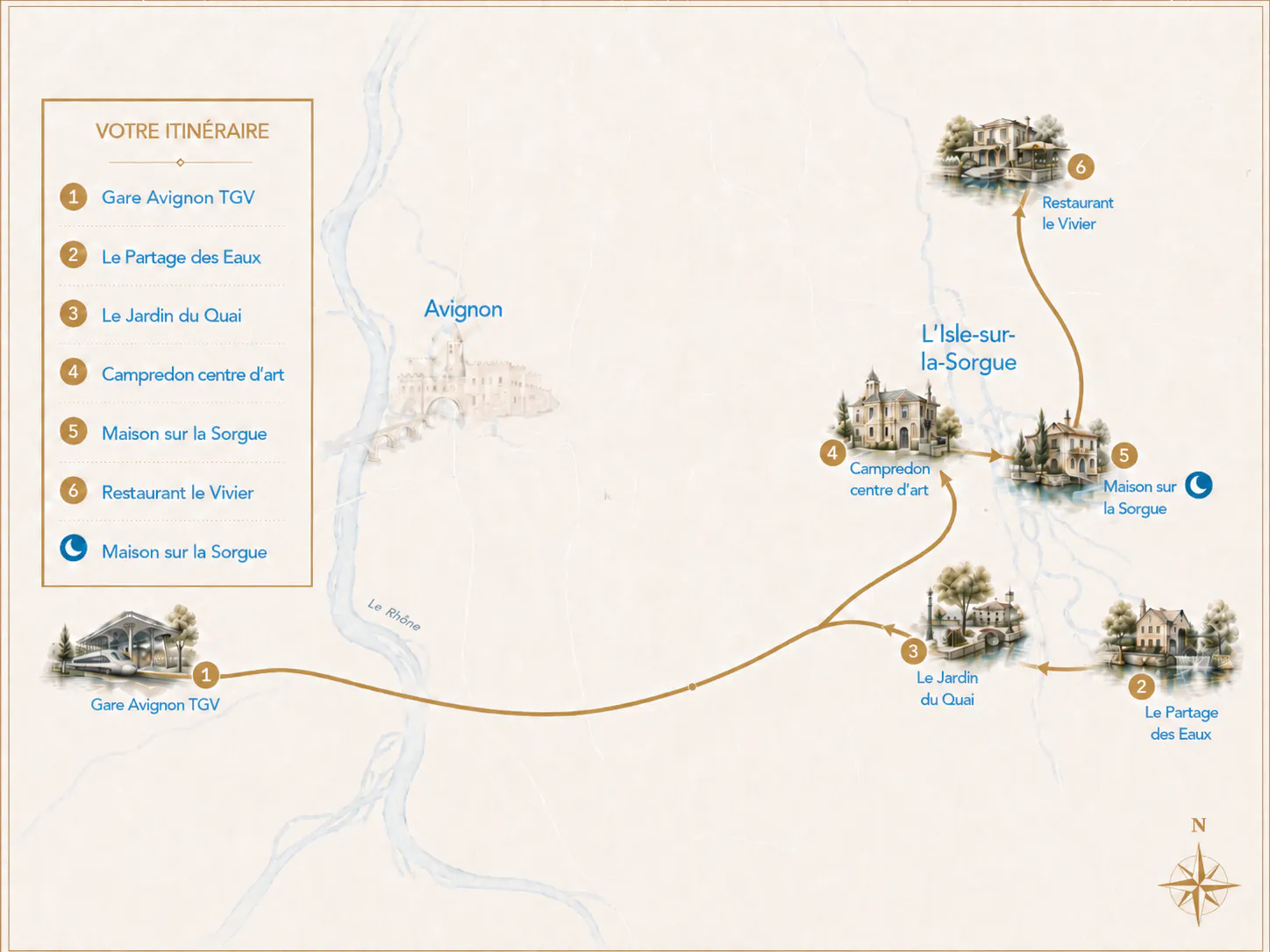
A glimpse of your first day’s itinerary
Morning by the Partage des Eaux and the Canals of the Sorgue
Upon arrival at Avignon TGV station, a private driver will take you to L’Isle-sur-la-Sorgue, around 30 minutes away.
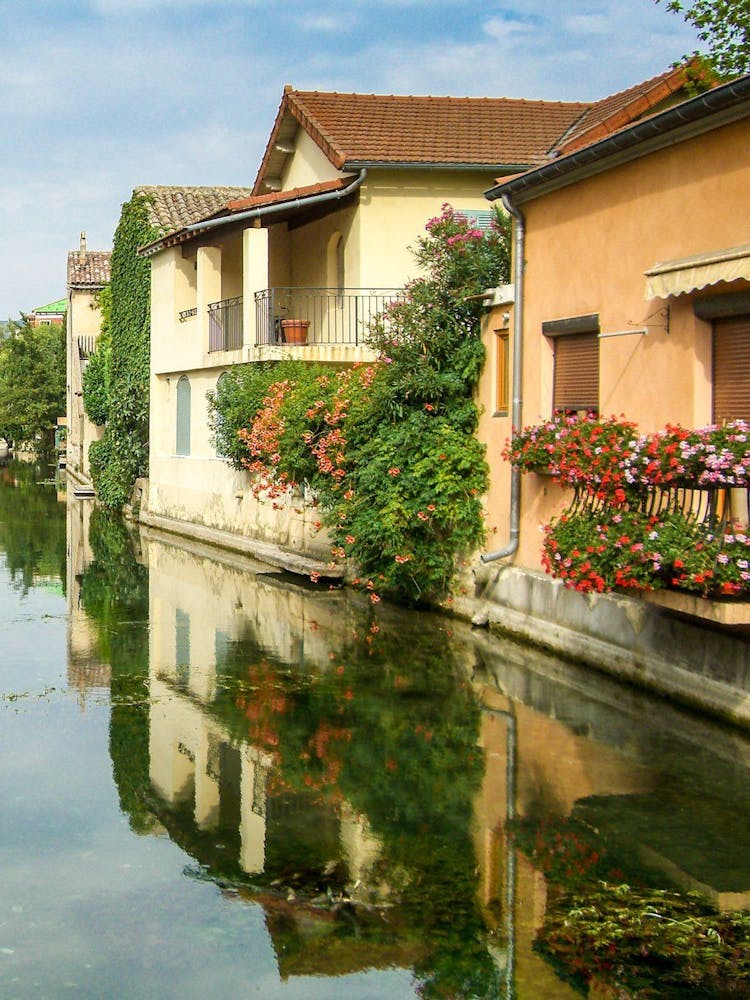
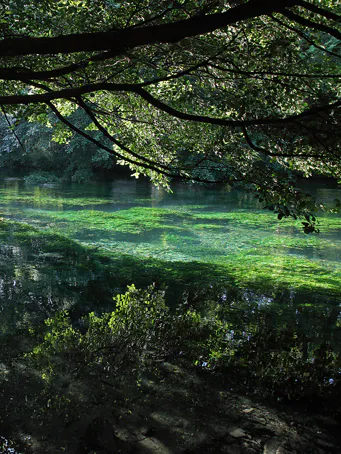
The visit begins at the Partage des Eaux, where the Sorgue divides and flows around the town in several branches.
Beneath the plane trees, the river shimmers with shades of green, blue and silver. The current distorts the reflections of the façades, creating an ever-changing landscape.
It is easy to imagine the first easels set up along the water’s edge, facing a light that seemed impossible to capture. Everything here evokes the motifs so dear to the Impressionists: reflections, shifting atmospheric effects and the fleeting nature of the landscape.
The walk continues along the canals and past the old waterwheels, reminders of the town’s history.
Lunch at Le Jardin du Quai
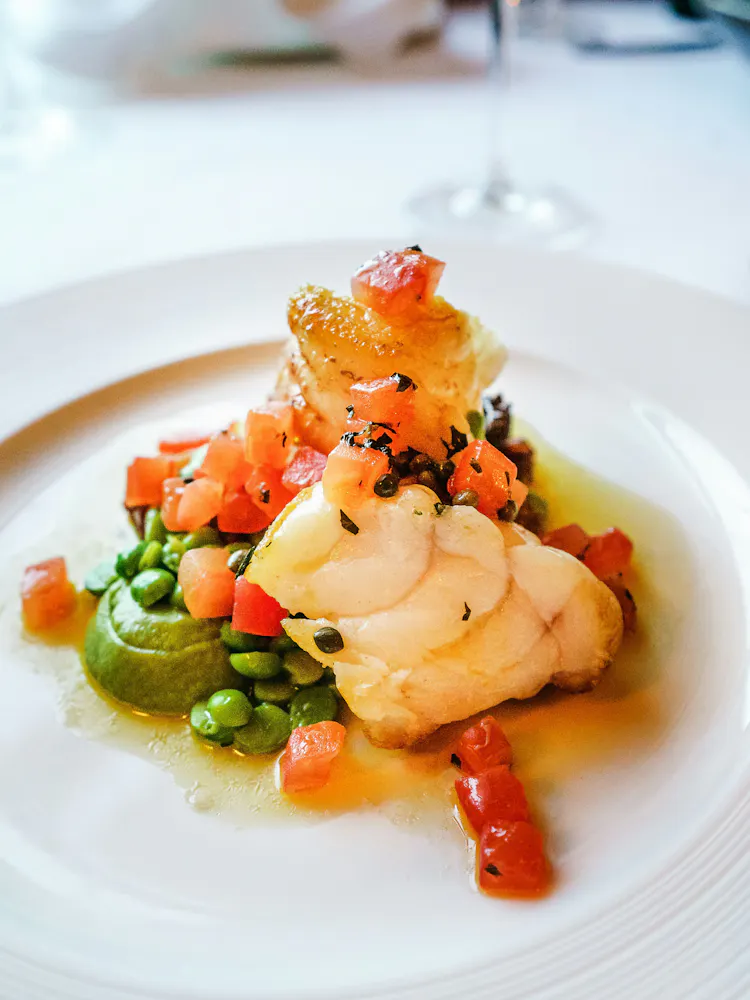
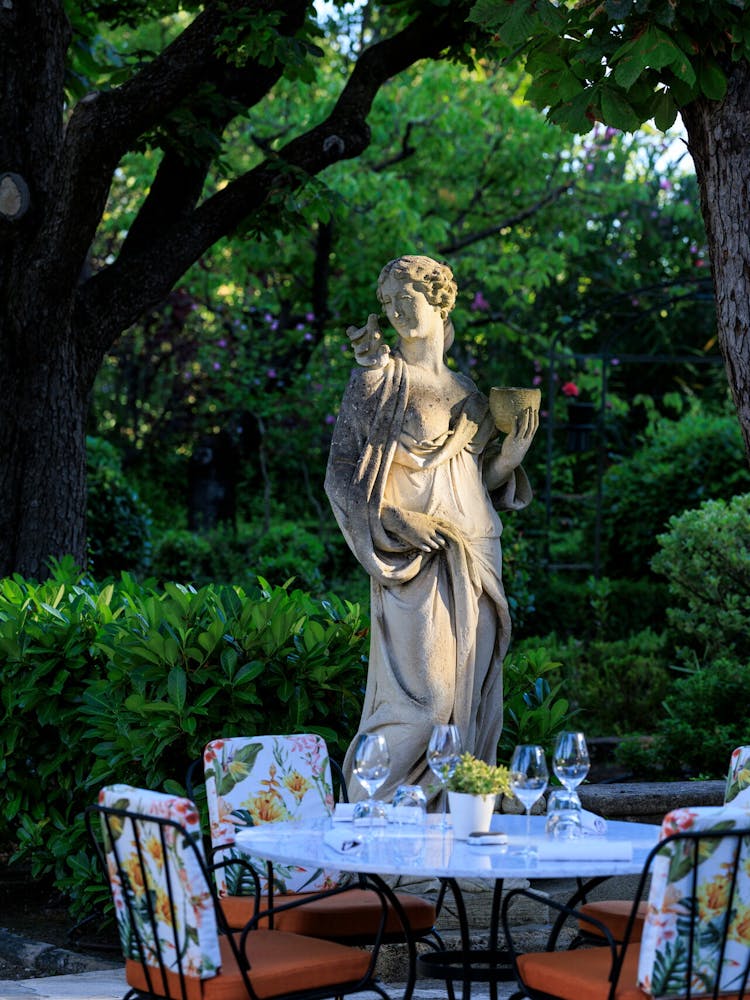
Just a short walk from the historic centre, Le Jardin du Quai lies hidden behind its walls like a secluded stage.
Beneath the trees, lunch takes on the feel of an elegant country outing. Seasonal cuisine, shifting shadows and sunlight filtering through the leaves evoke the open-air scenes the Impressionists loved to capture.
A refreshing, spontaneous interlude that flows naturally from the morning’s discoveries.
Afternoon: From Reflection to Image
After lunch, visit Campredon art & image, housed in an 18th-century townhouse.
Dedicated to photography and contemporary art, its exhibitions offer a fresh perspective on reality and on the ways in which images are constructed.
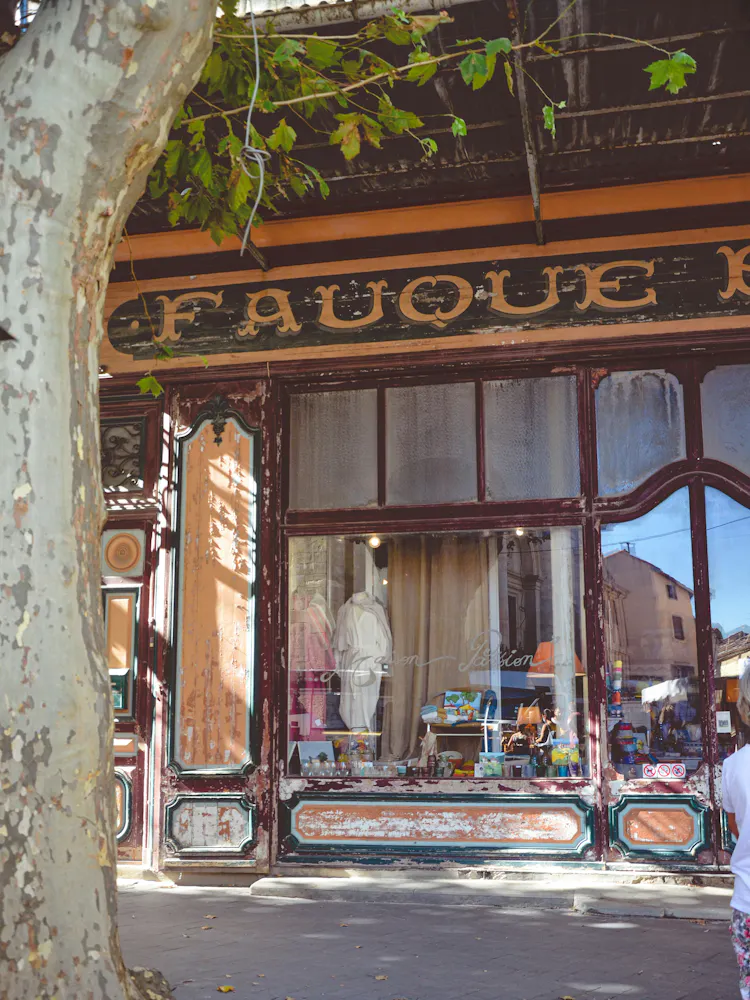
The experience continues through the galleries and antique shops of L’Isle-sur-la-Sorgue. Paintings, drawings, antique frames and collectors’ objects create a world that holds particular appeal for art lovers.
This leisurely stroll extends the day’s exploration of ways of seeing, image-making and the pleasure of collecting, without seeking to establish a direct historical connection with the Impressionist painters.
Check-in at La Maison sur la Sorgue
Voici une traduction fluide et élégante :
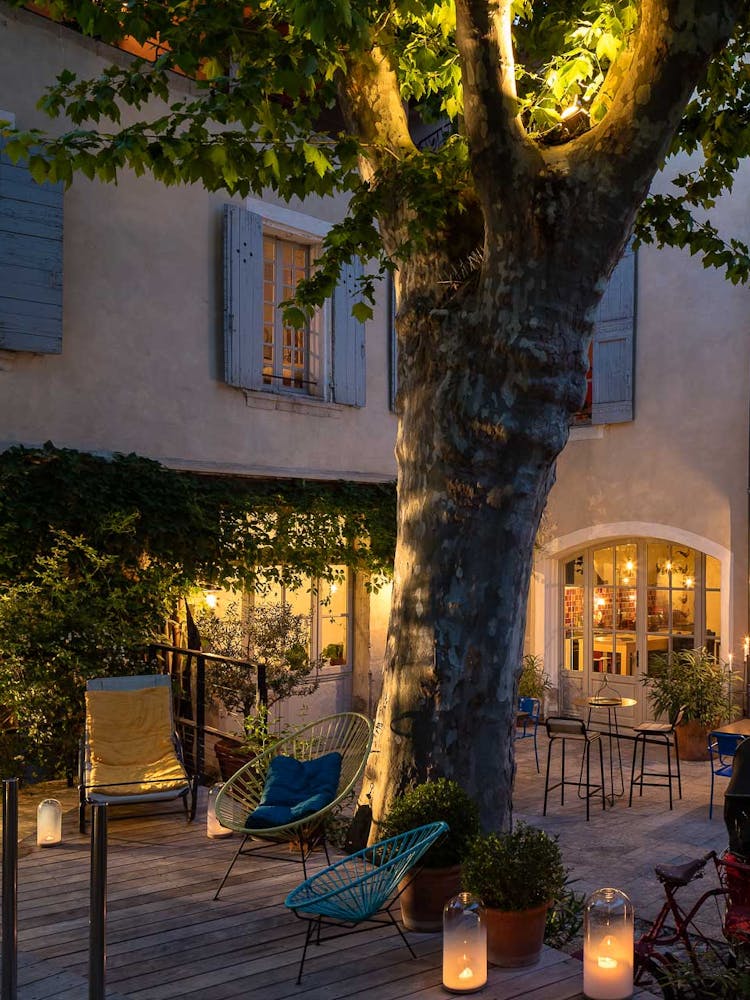
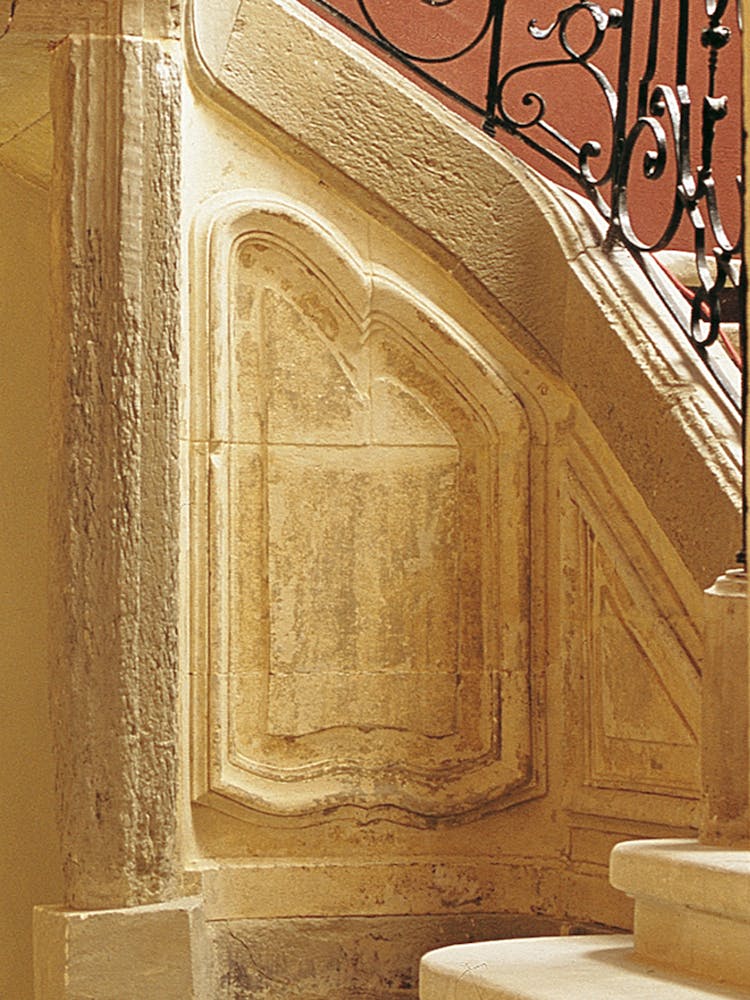
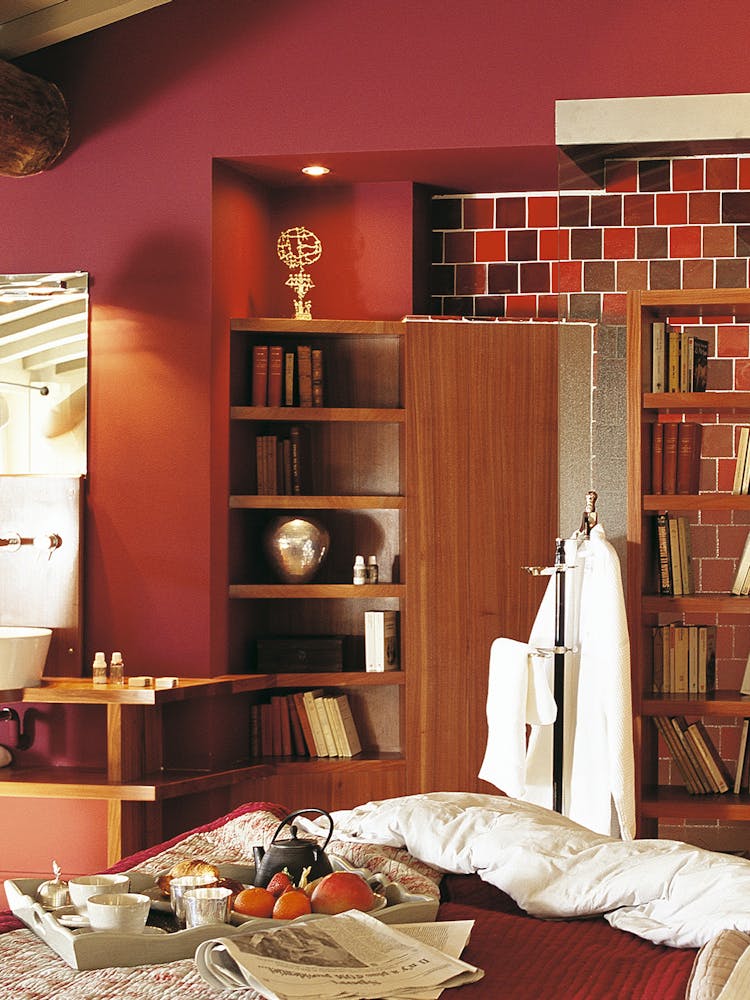
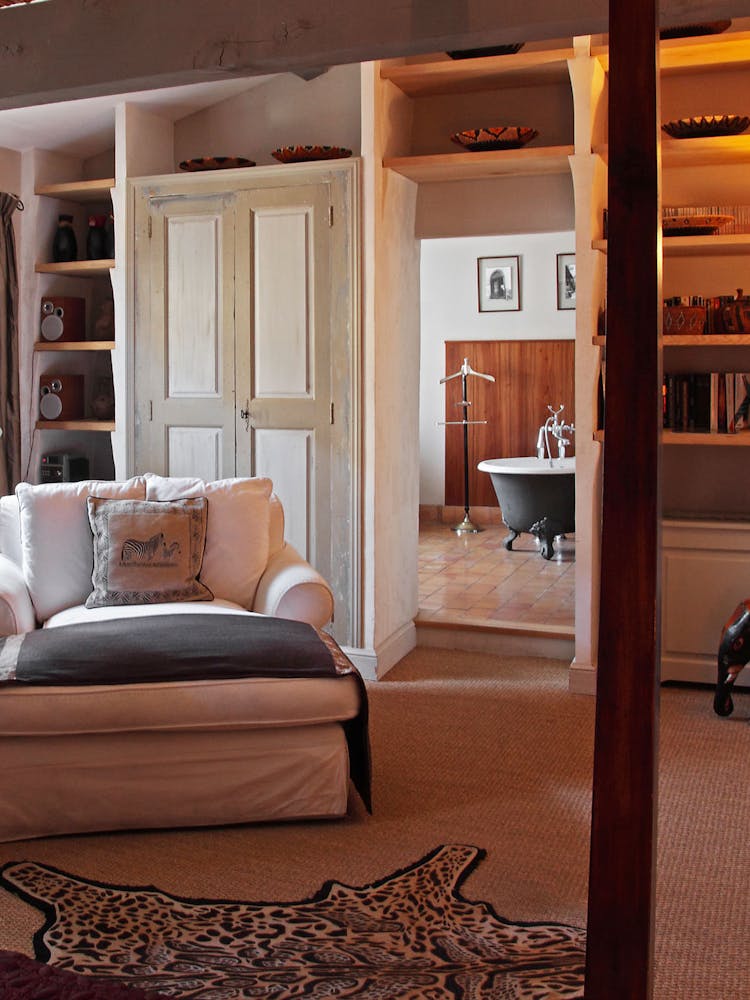
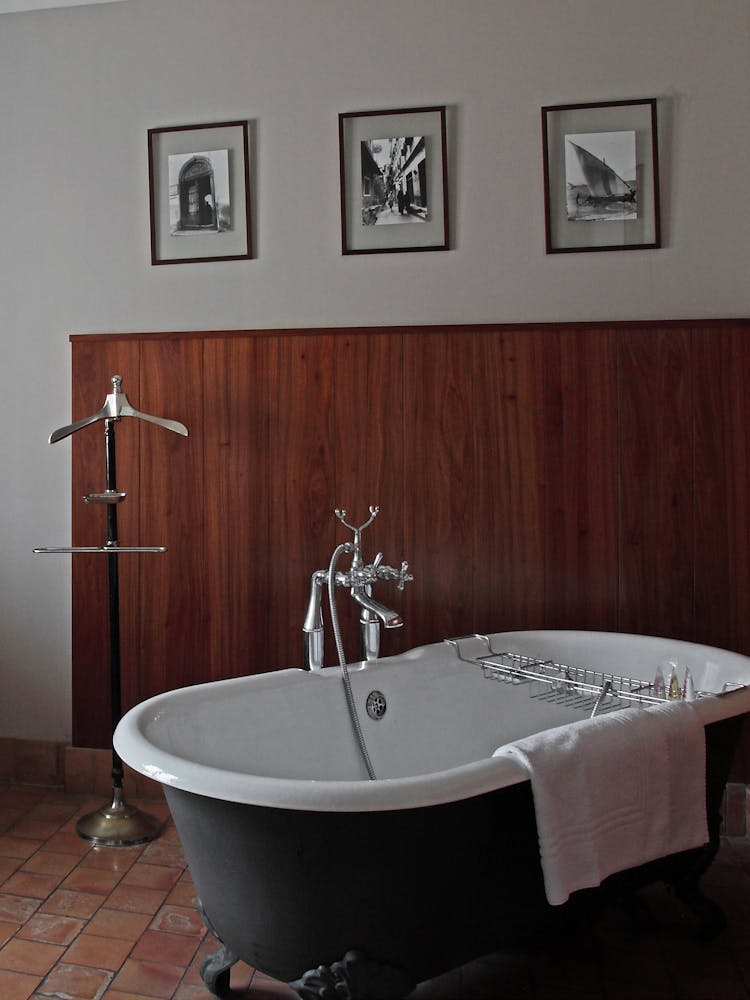
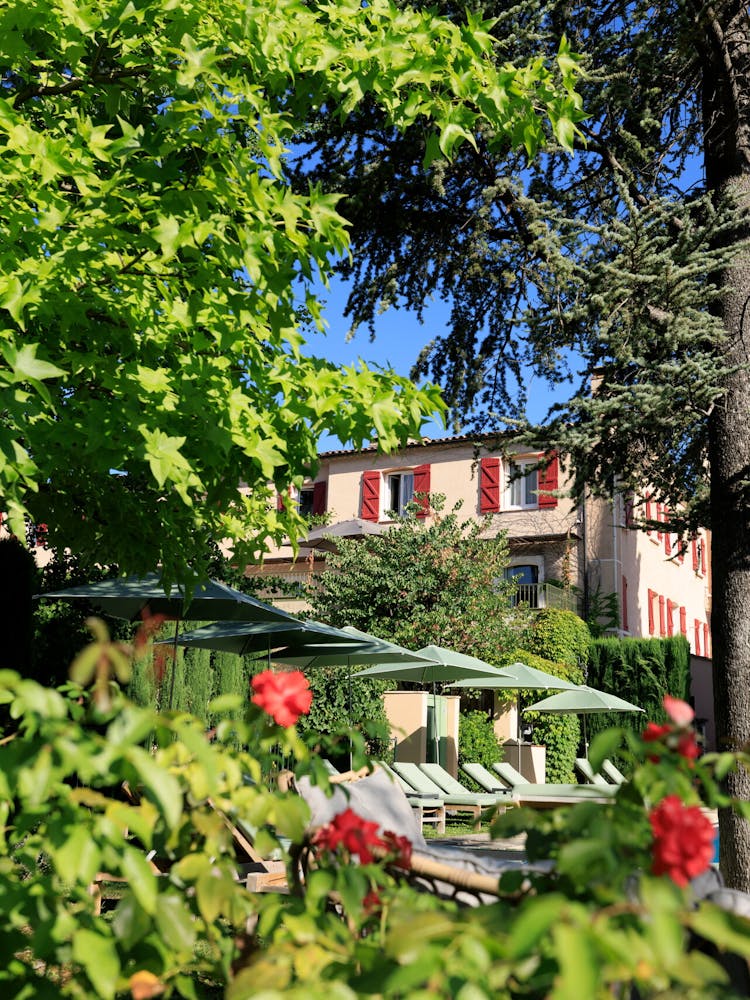
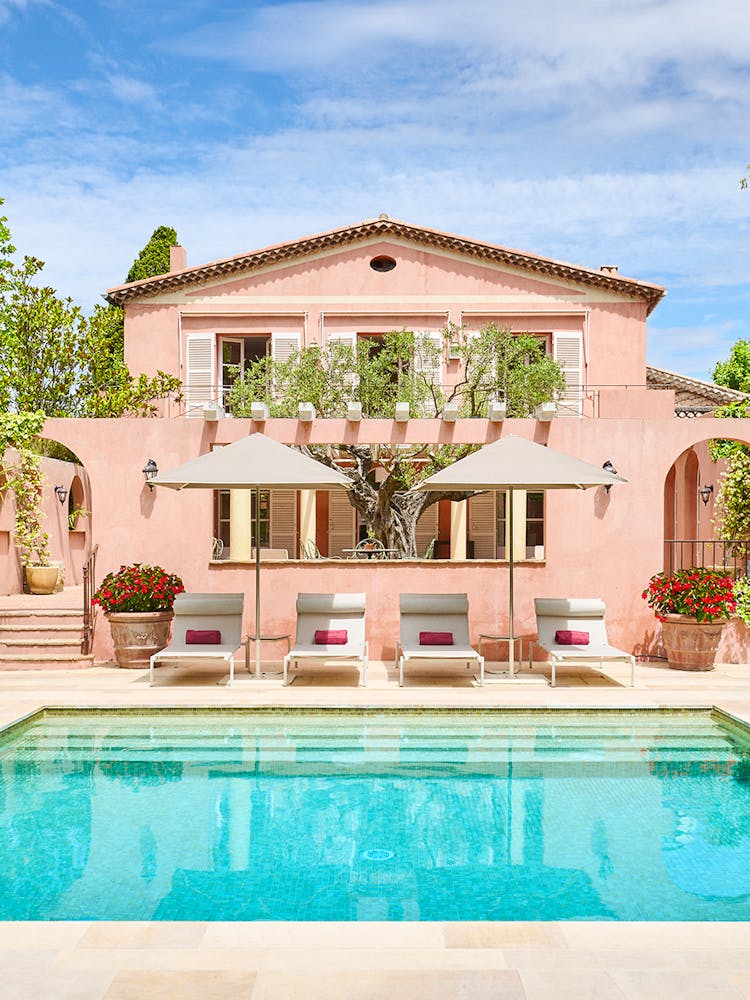
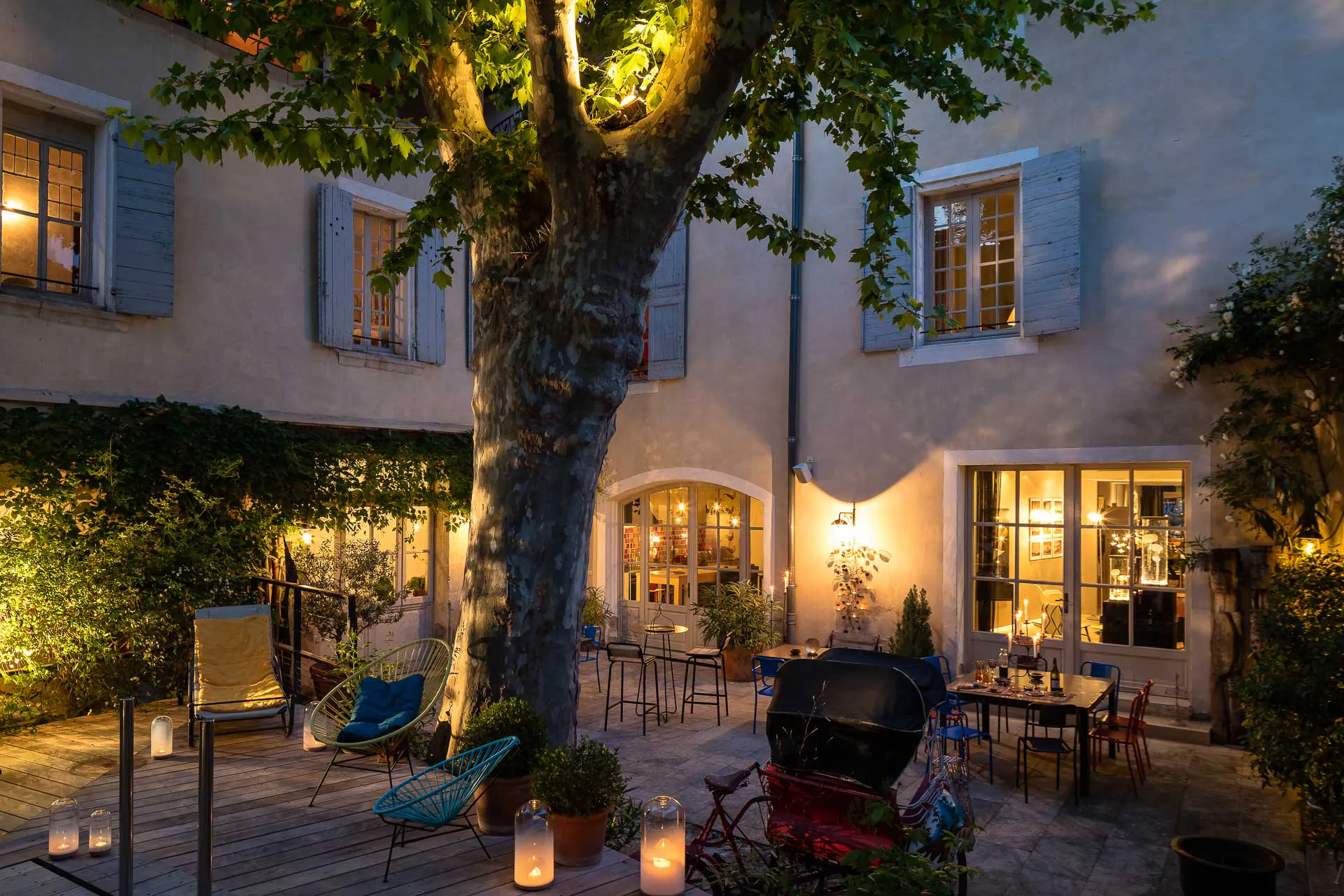
In the late afternoon, check in at La Maison sur la Sorgue, a 17th-century townhouse in the heart of the town.
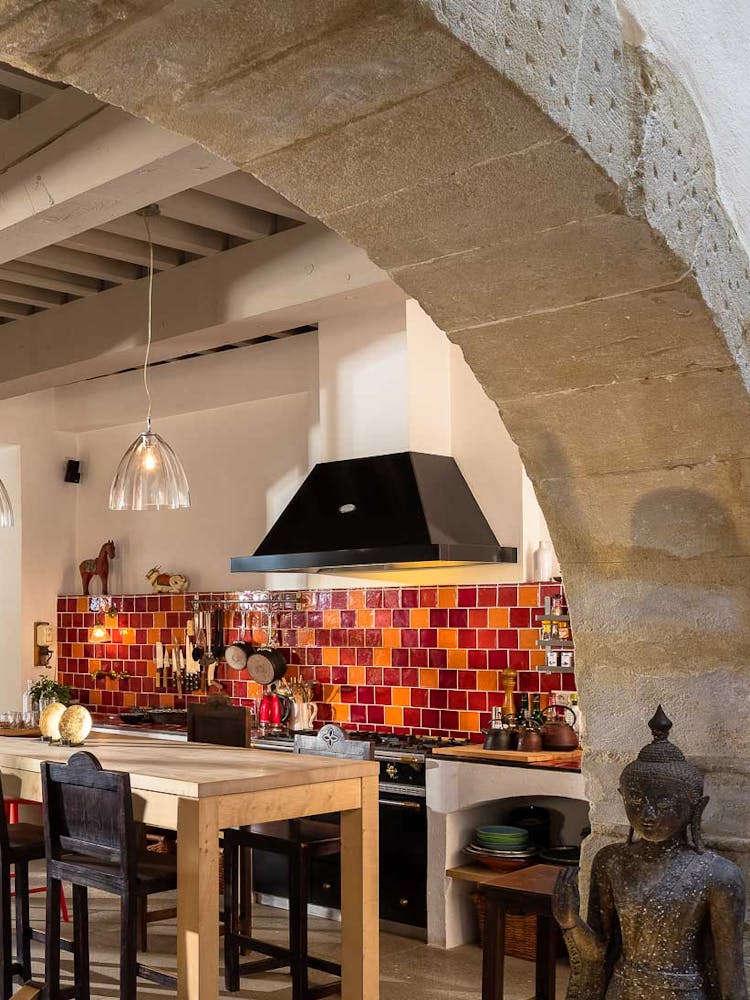
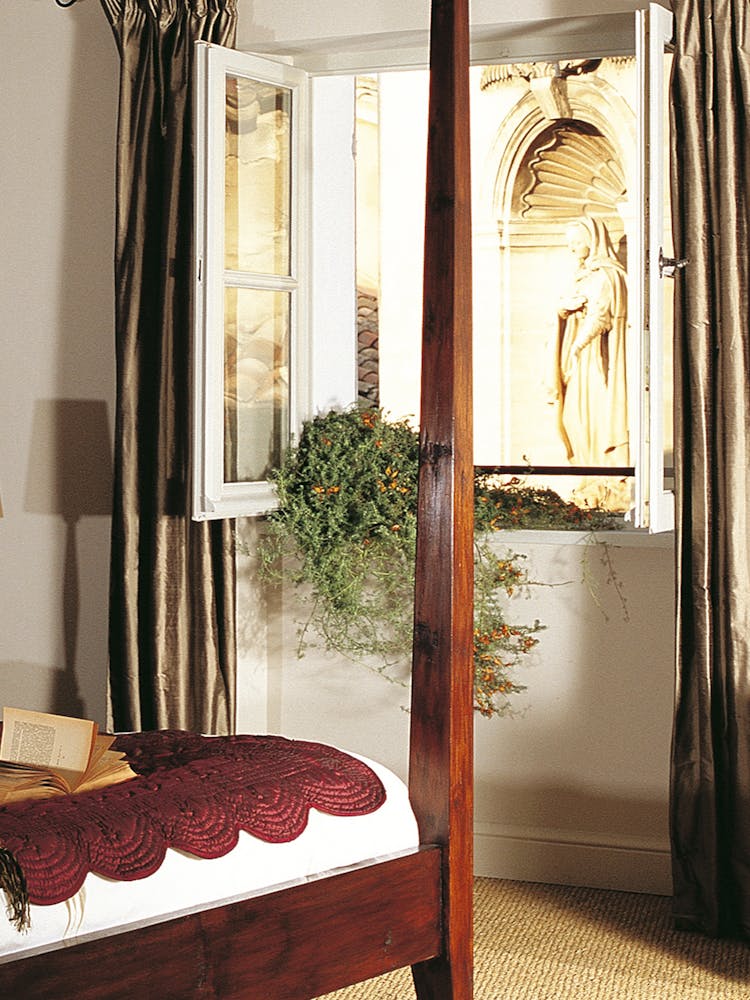
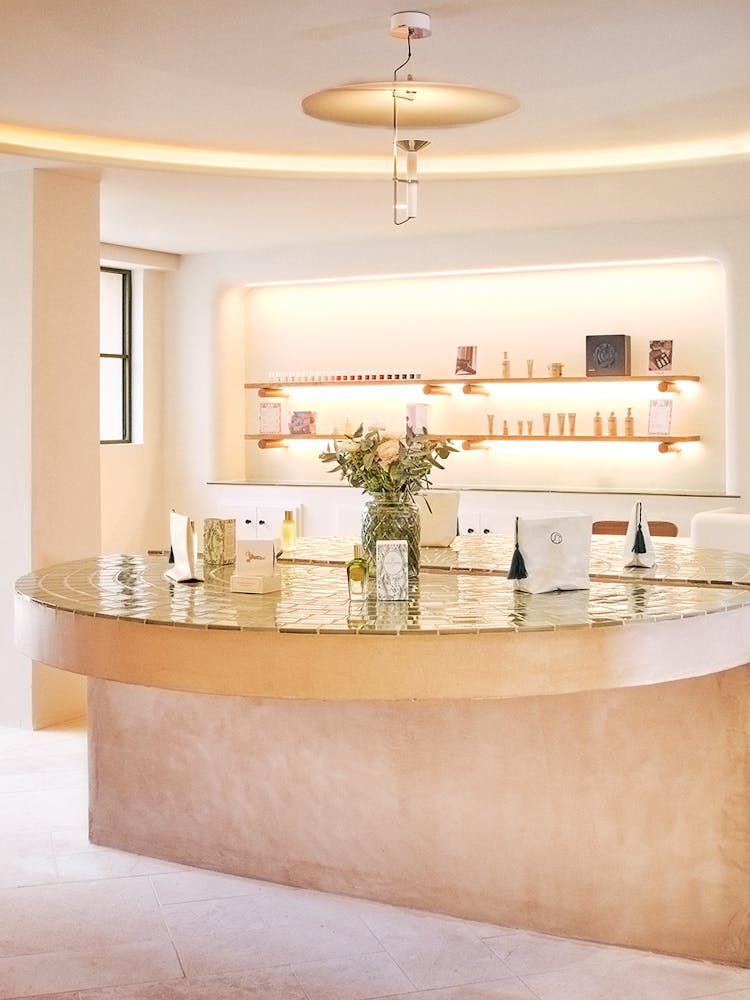
The property unfolds like a collector’s home. Paintings, photographs, sculptures and objects gathered on travels fill the salons, suites and outdoor spaces.
The Retour De Voyage gallery, which forms part of the house, presents artists and designers selected by the owners. The works change with each exhibition, giving every stay a different atmosphere.
After Campredon and the antique dealers, this address is a natural continuation of the day. Art is no longer viewed only in a gallery: it becomes part of the stay and of everyday life within the house.
A few moments of rest can be enjoyed in the inner courtyard or by the swimming pool before heading to Le Vivier for dinner.
Dinner at Le Vivier restaurant
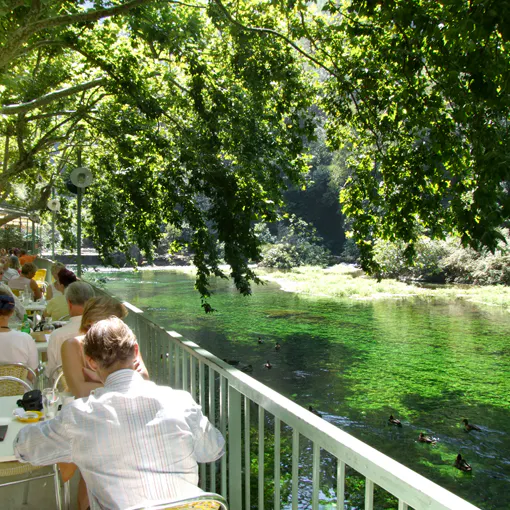
Dinner is served at Le Vivier, set on the banks of the Sorgue.
The contemporary cuisine celebrates seasonal produce in a peaceful and elegant setting.
The river thus accompanies this first day through to nightfall.
Day 2: Van Gogh’s Colours
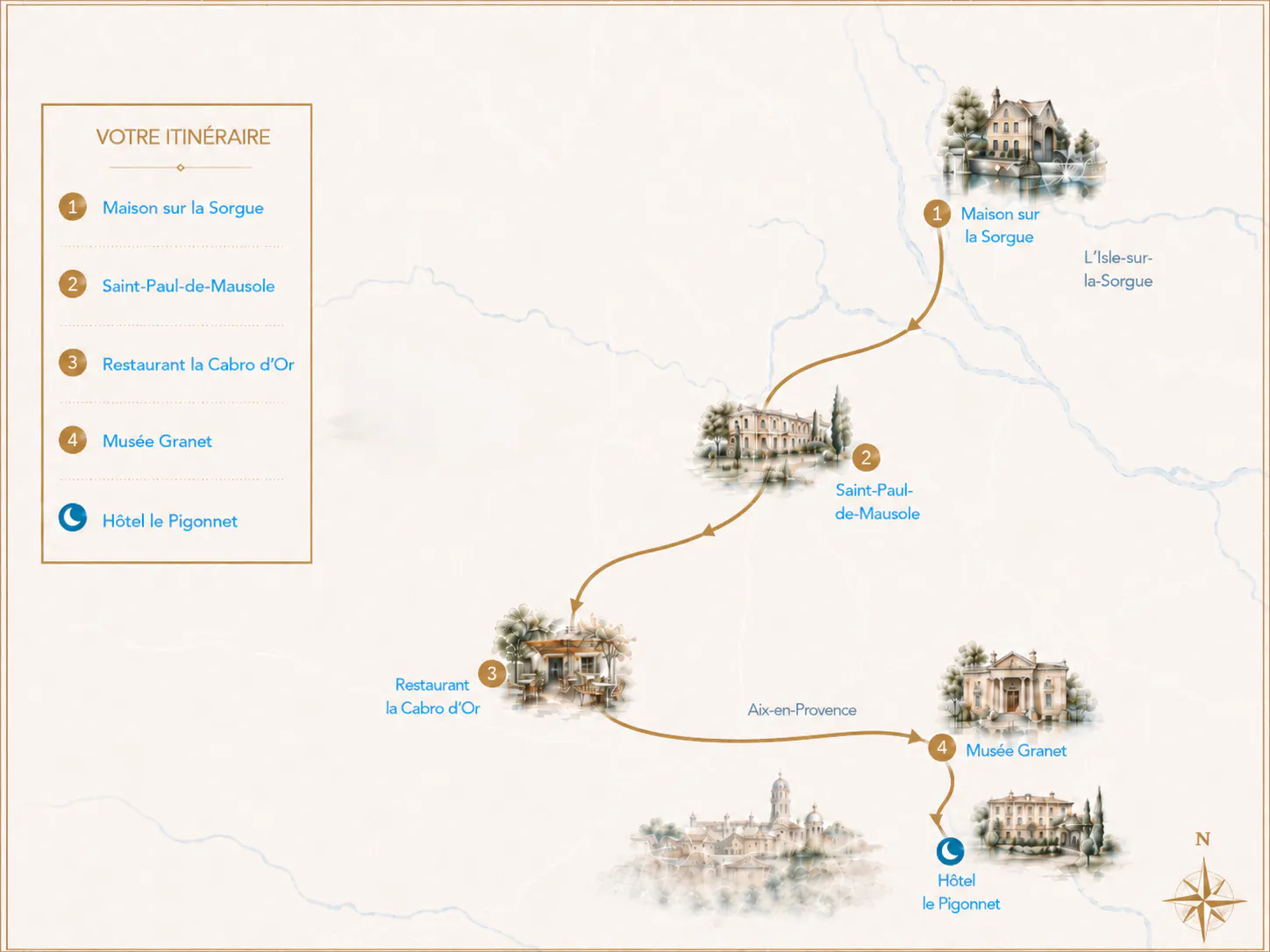
A glimpse of your first day’s itinerary
Morning at Saint-Paul-de-Mausole
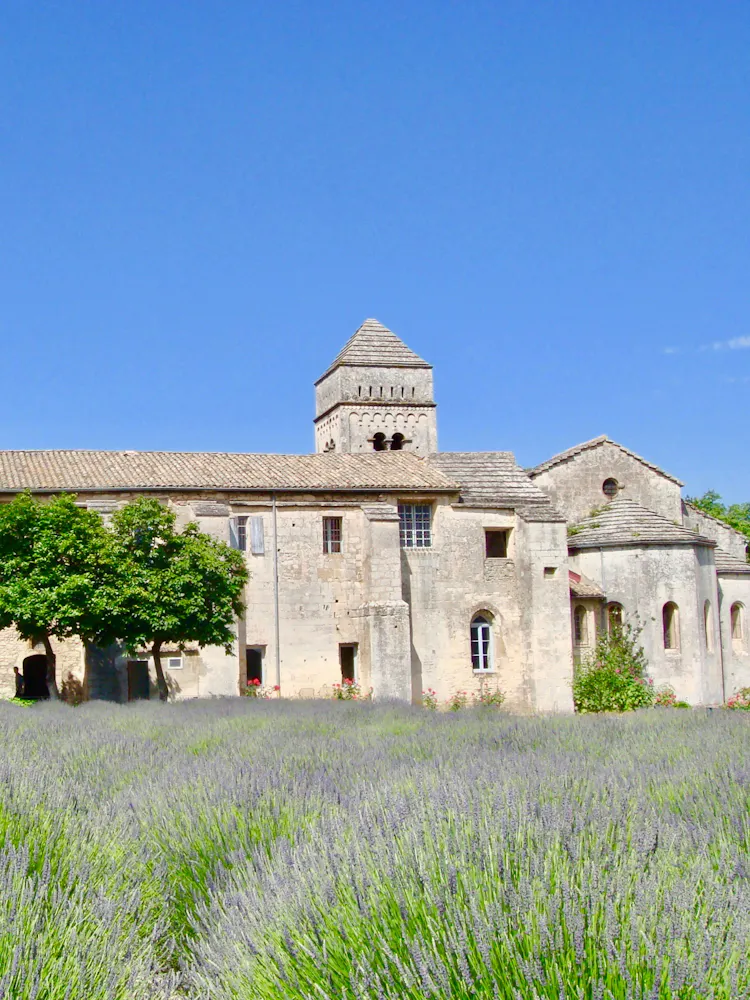
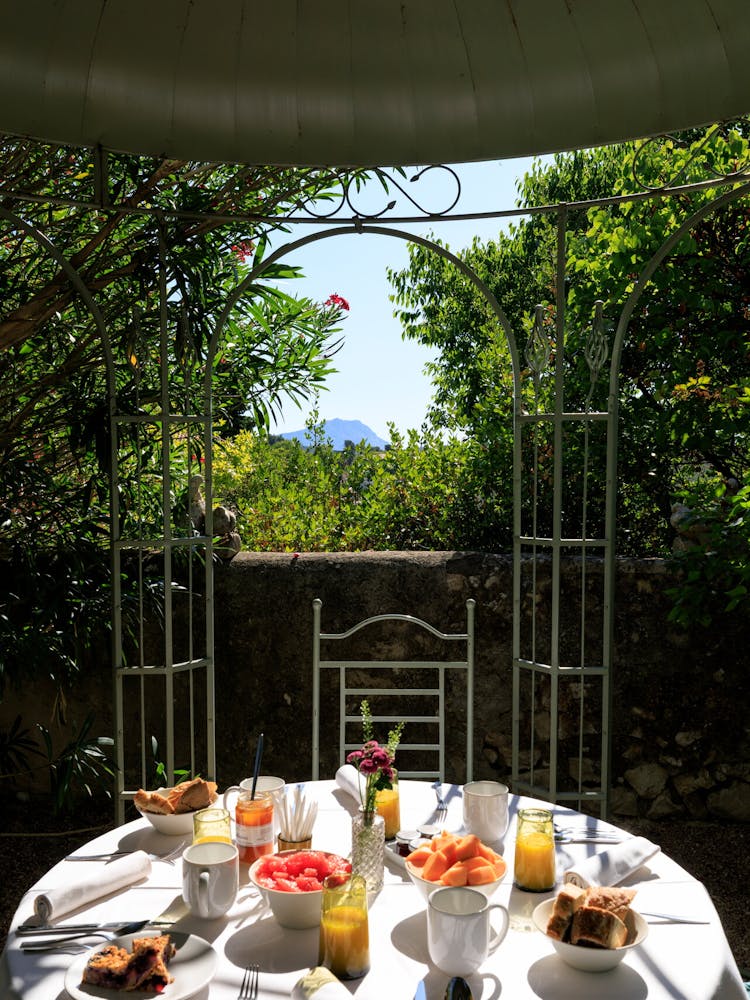
After breakfast, depart for Saint-Rémy-de-Provence and the landscapes of the Alpilles.
Van Gogh stayed at Saint-Paul-de-Mausole from May 1889 to May 1890. From his room and the institution’s gardens, he observed the irises, olive trees, cypresses and surrounding hills.
A visit to the cloister, gardens and spaces dedicated to the artist reveals the motifs that shaped this period of his work.
In Paris, Van Gogh had discovered the lighter palette and freer brushwork of the Impressionists. In Provence, he transformed this legacy into a more expressive style of painting, in which colour conveys both the landscape and the artist’s emotions.
The visit continues along part of the Van Gogh trail.
Reproductions displayed in the streets and around Saint-Paul-de-Mausole make it possible to compare the works with the landscapes that inspired them.
Although the surroundings have changed, the olive trees, cypresses and outline of the Alpilles remain recognisable. The walk reveals how Van Gogh moved beyond simple representation to offer a deeply personal vision of Provence.
Lunch at La Cabro d’Or restaurant
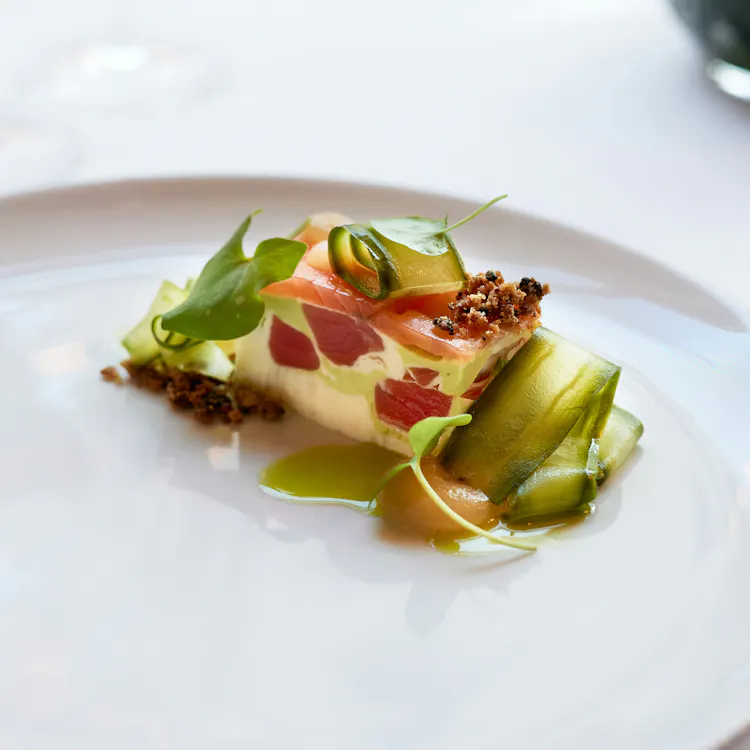
Lunch is served at La Cabro d’Or, in the heart of the Baumanière estate.
The restaurant is set amid olive trees, Mediterranean gardens and pale limestone cliffs.
Its refined cuisine continues the exploration of the region through the produce and flavours of Provence.
Afternoon at the Musée Granet
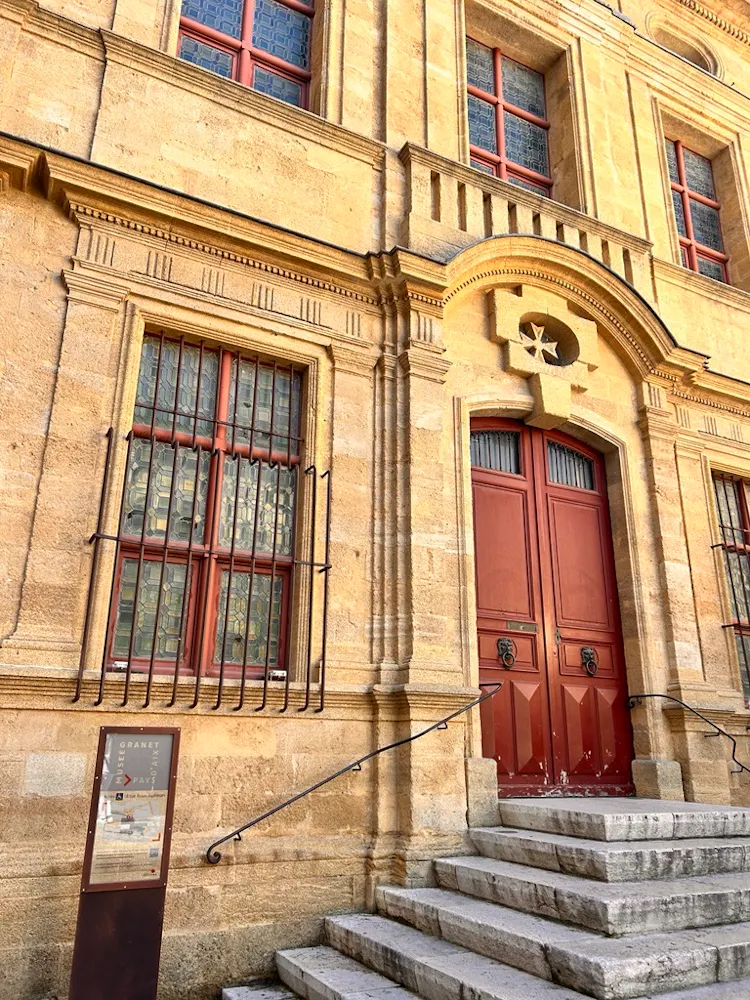
After lunch, continue directly to Aix-en-Provence.
This visit marks the transition from Van Gogh to Cezanne, and from expressive colour to a greater focus on form.
Cezanne took part in the Impressionist exhibitions of 1874 and 1877. Like the artists associated with the movement, he shared a taste for painting outdoors and a keen interest in light.
His work, however, gradually evolved towards a different ambition: to give the landscape greater structure and to build volume through colour.
The works on display at the museum introduce this new way of looking at Provence, ahead of the visits devoted to the artist the following day.
Late afternoon, dinner and overnight stay at Le Pigonnet
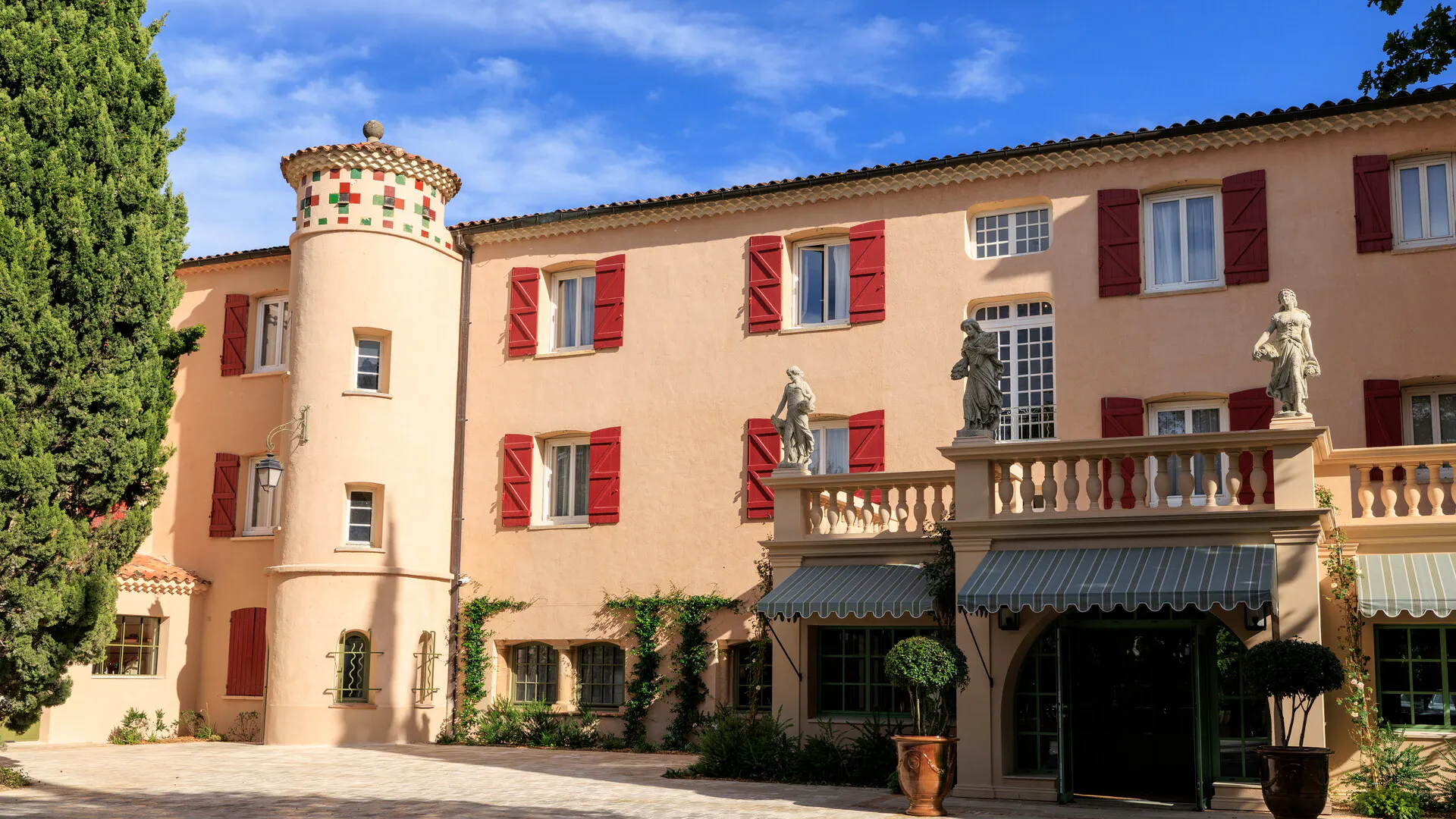
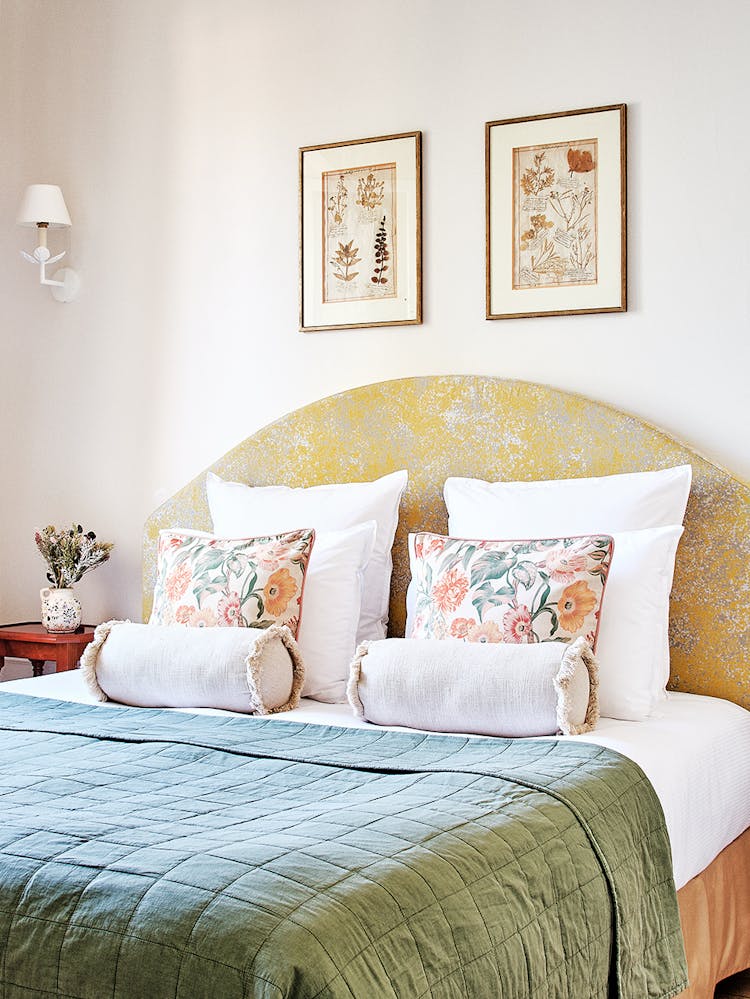
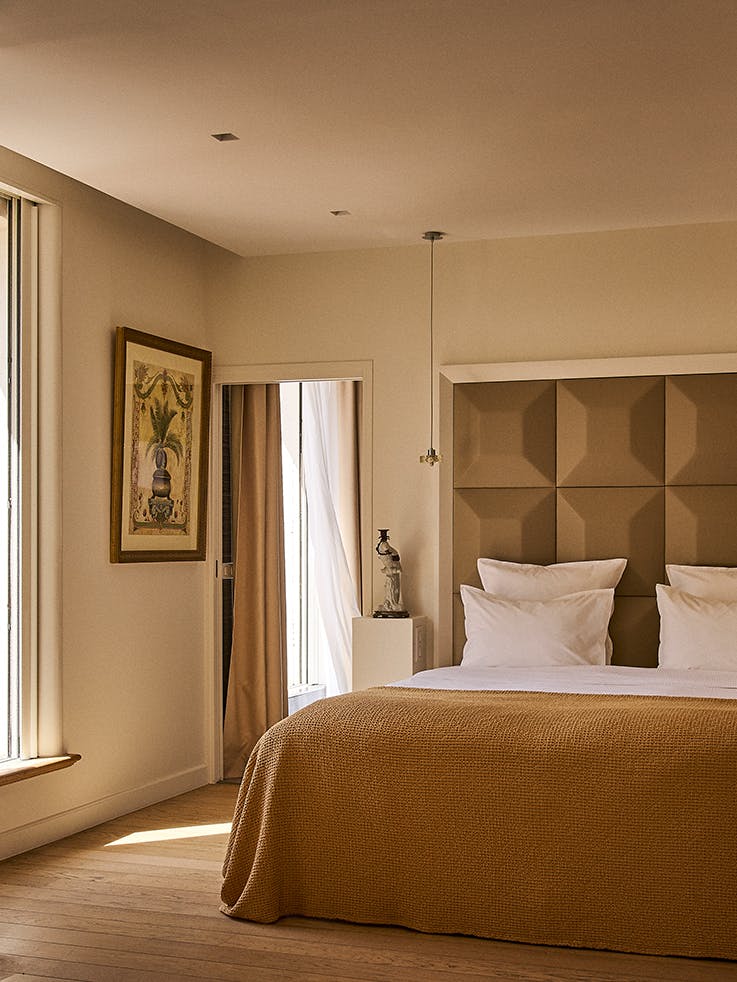
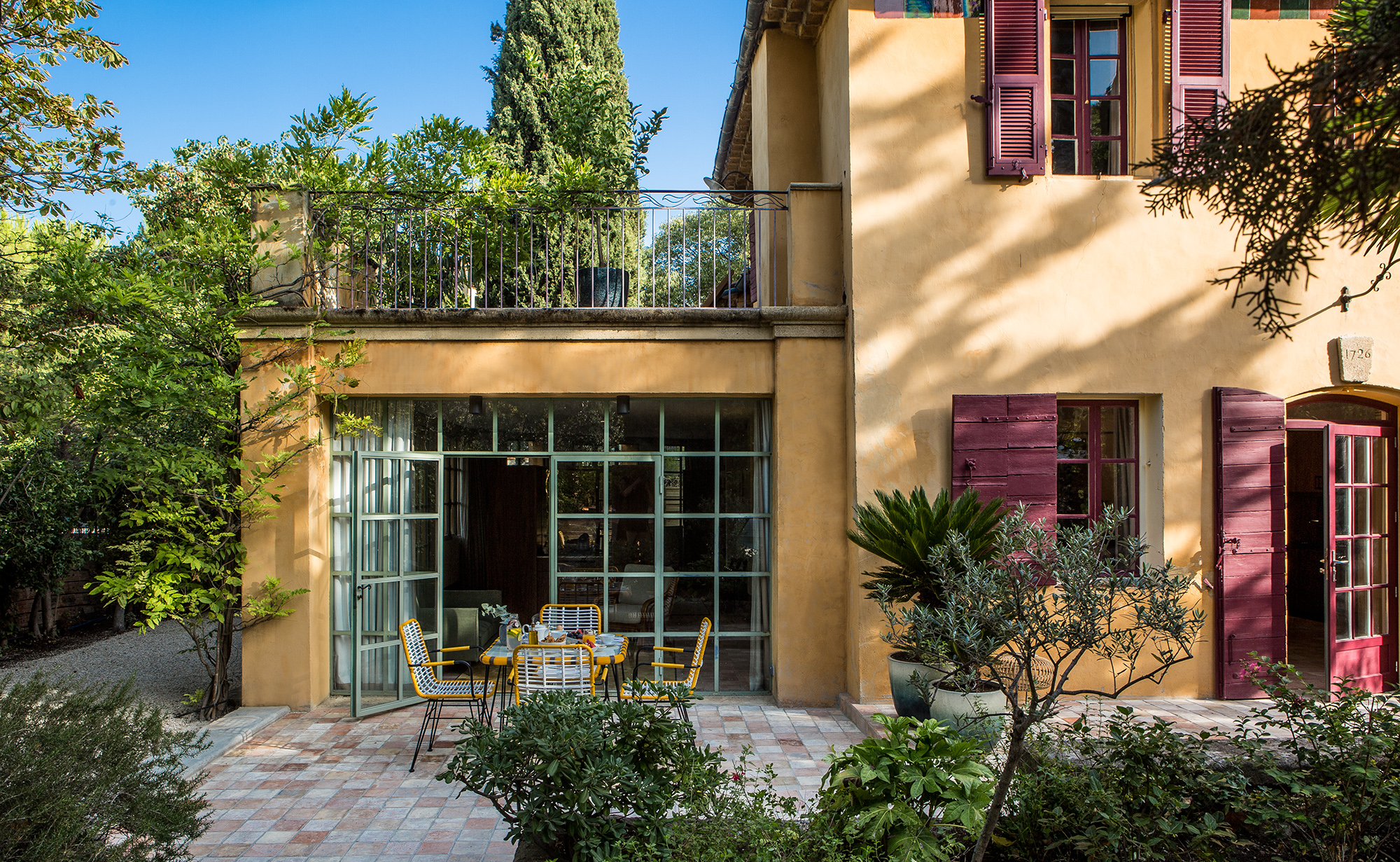
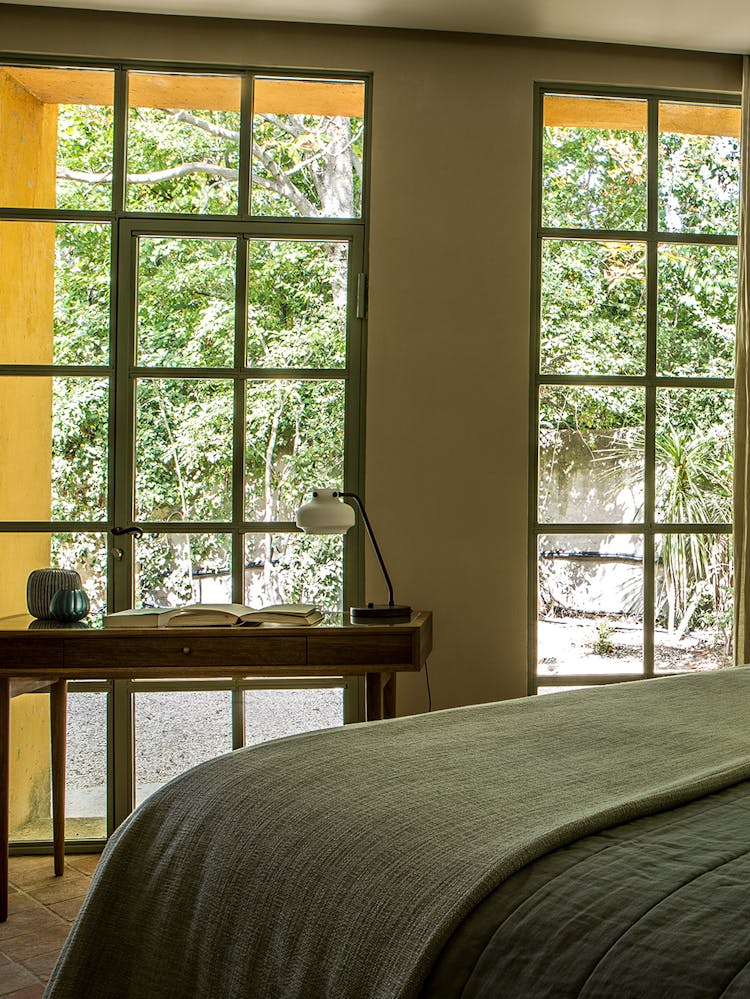
In the late afternoon, check in at Le Pigonnet, an 18th-century country house surrounded by gardens, just a few minutes from the historic centre of Aix-en-Provence.
The estate has a special connection with Cezanne, who is said to have visited the property and set up his easel in the gardens facing Mont Sainte-Victoire. Following the visit to the Musée Granet, this arrival offers a chance to reconnect with the artist through an Aix landscape shaped by light, vegetation and sweeping perspectives.
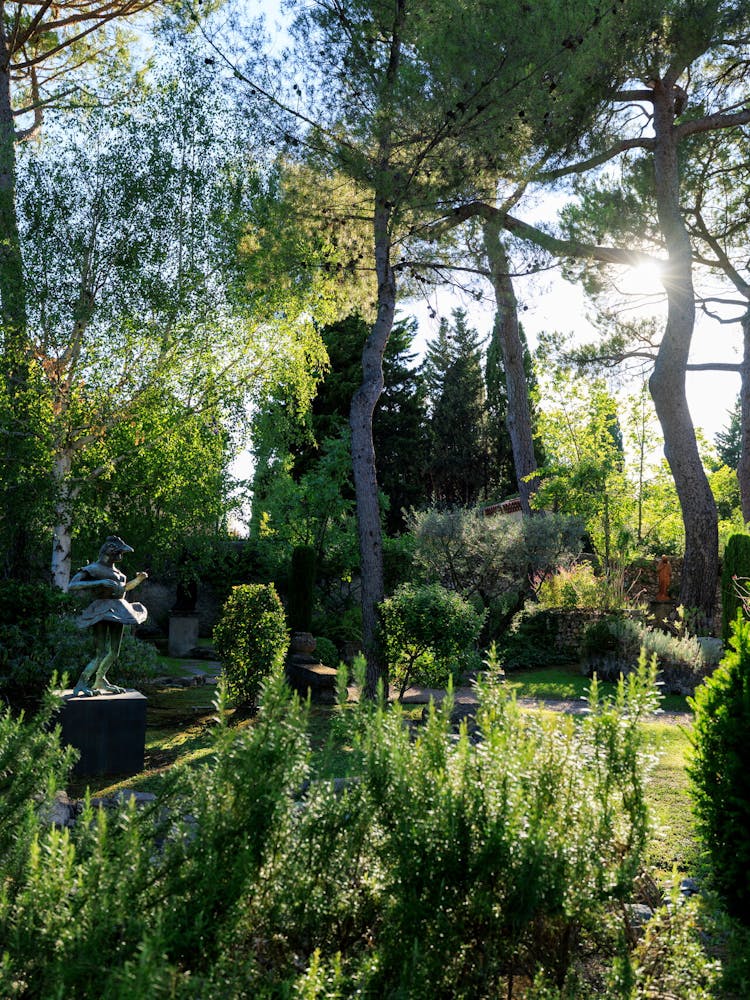
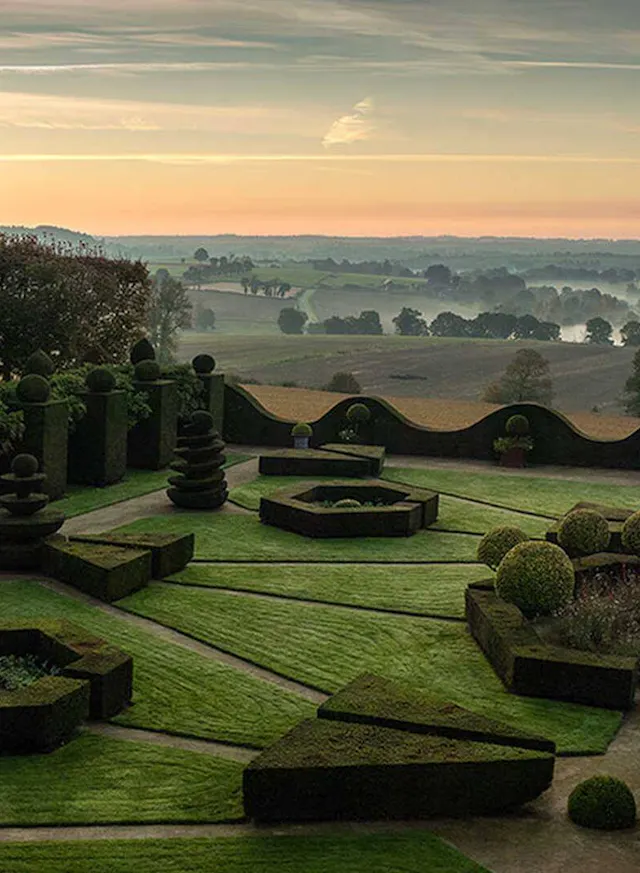
The experience continues with a stroll through the gardens, among plane trees, fountains, Mediterranean flowerbeds and contemporary artworks. As daylight fades, the colours shift and the shadows lengthen across the lawns.
Time can then be set aside to relax at Folie Verte, Le Pigonnet’s spa. Designed as a natural extension of the gardens, it combines botanical treatments, massages and a sensory circuit featuring a hammam, sauna, sensory bath and ice fountain. Creativity also plays an important role, with experiences centred on art therapy and artistic expression. A distinctive approach that is perfectly in keeping with the cultural theme of the journey.
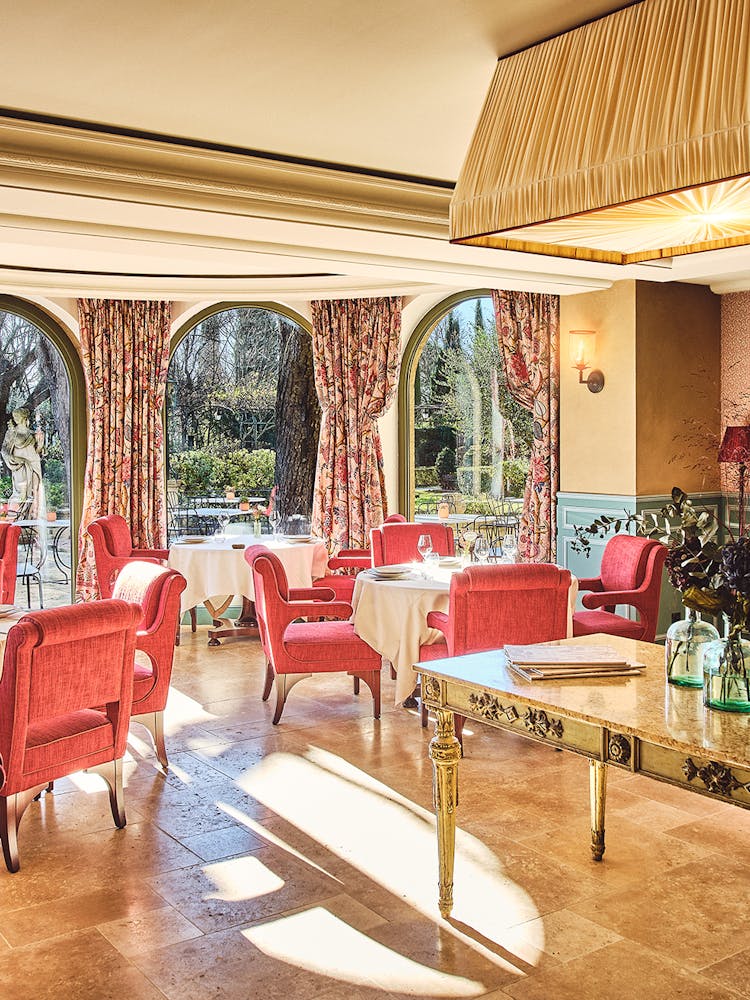
Dinner is served at La Table du Pigonnet, on the terrace overlooking the gardens whenever the weather permits. The Mediterranean cuisine celebrates the produce and flavours of Provence.
The evening and overnight stay at Le Pigonnet thus extend the experience through art, landscape and the Aixois art of living.
Day 3: Form and Motif
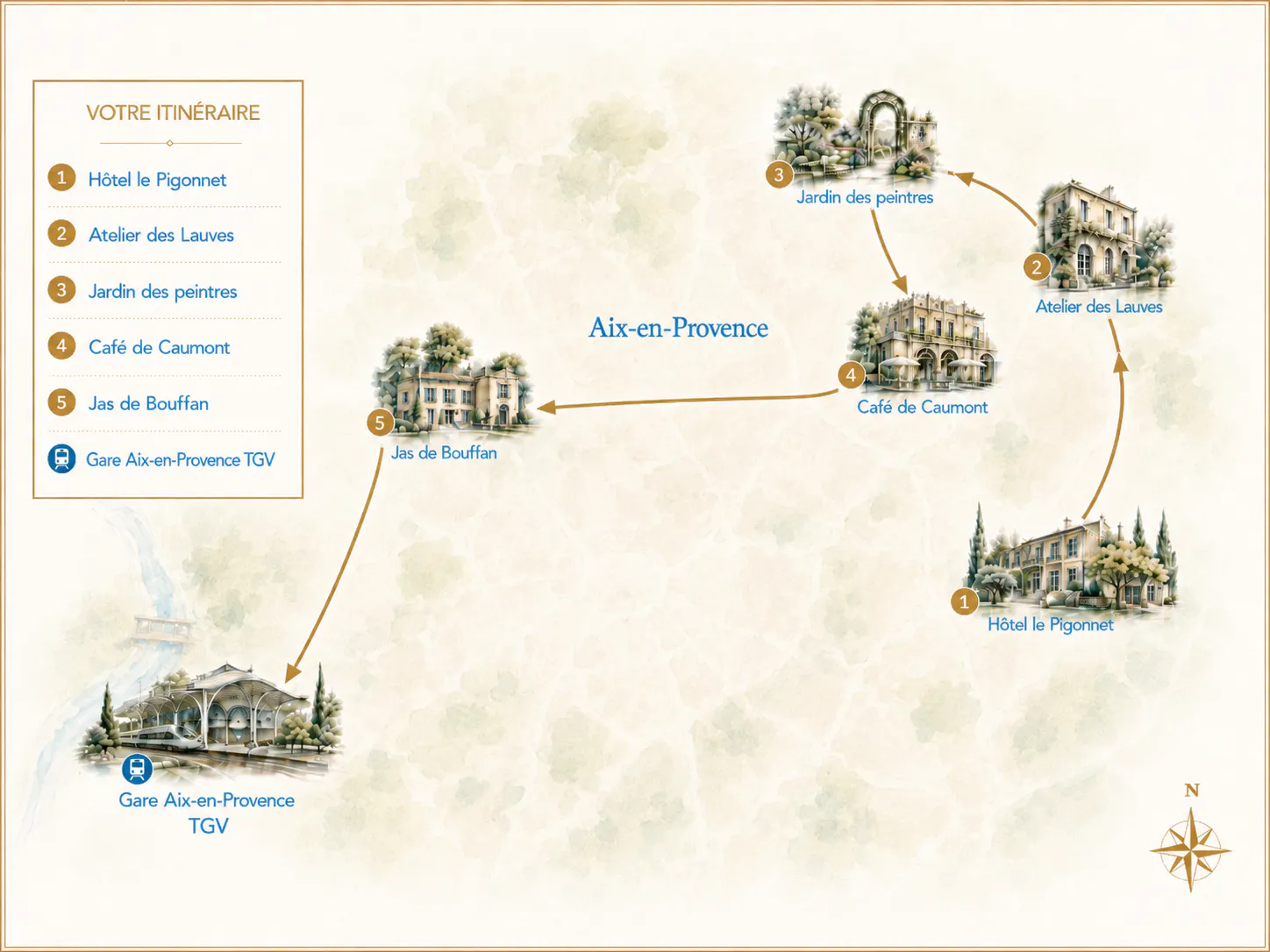
A glimpse of your first day’s itinerary
Morning at Cezanne’s Studio at Les Lauves and the Painters’ Garden
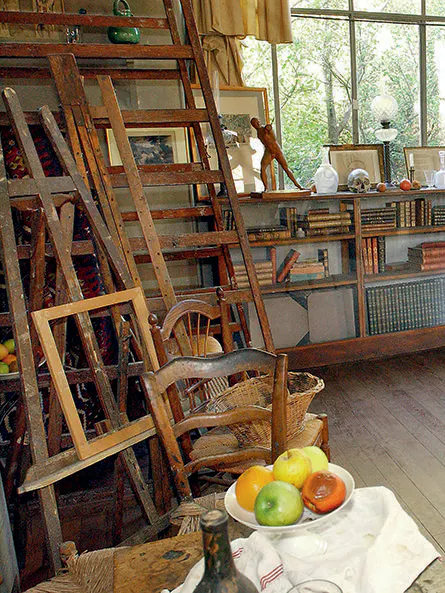
The morning begins at Cézanne’s Studio at Les Lauves, built for the artist on the hills above Aix-en-Provence.
The studio retains its original furniture, painting materials and several objects used by Cézanne in his still lifes. Following the works seen the previous day at the Musée Granet, this visit offers an intimate glimpse into his everyday world and a deeper understanding of his working methods.
From the studio, a short walk leads to the Painters’ Garden.
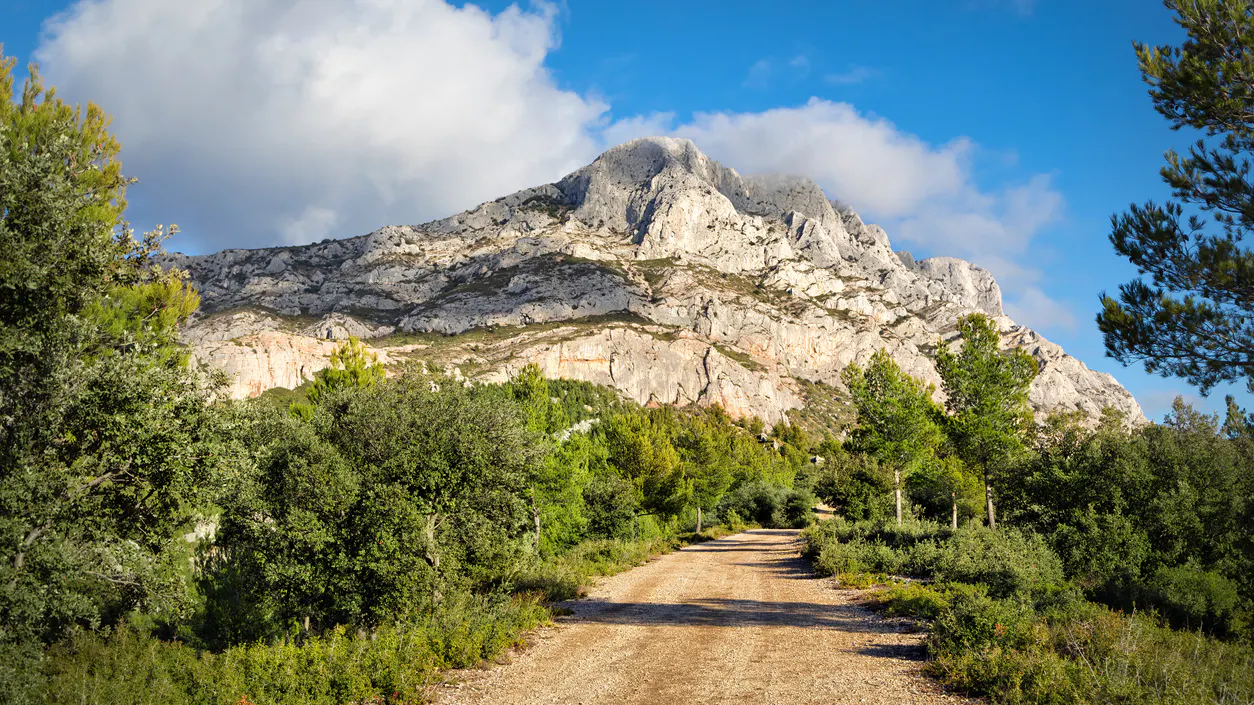
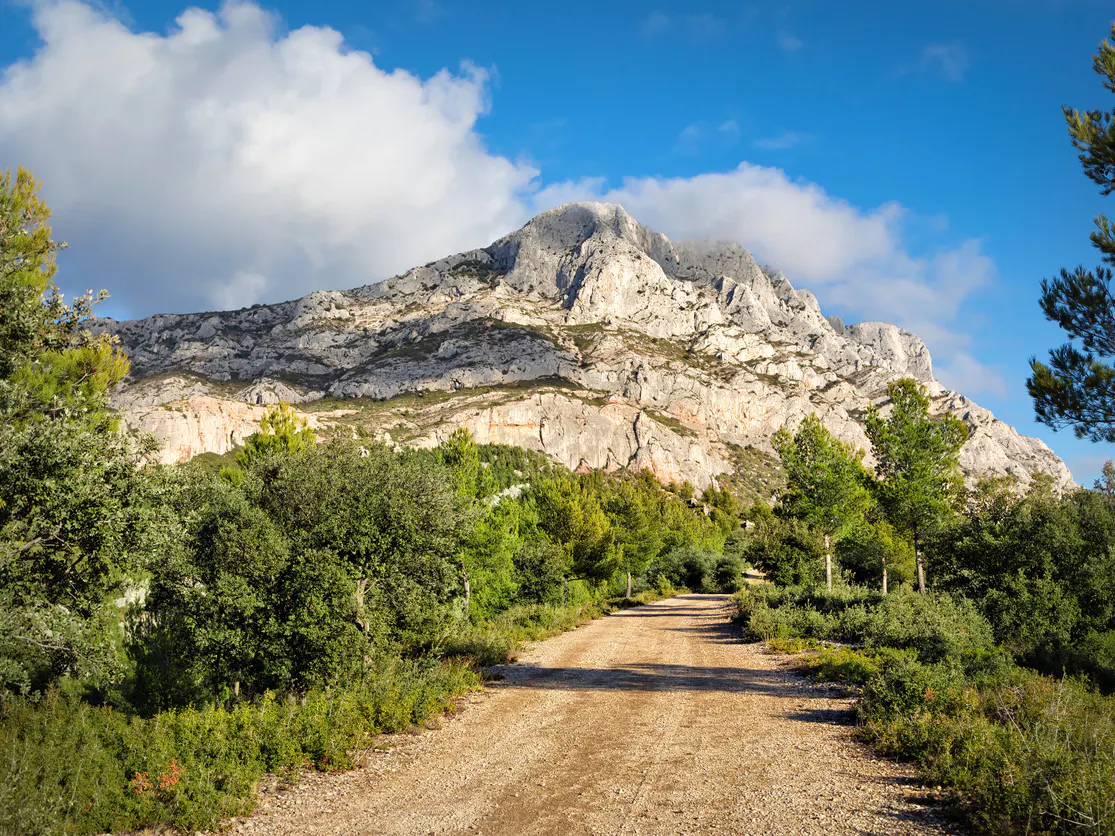
The viewpoint offers sweeping views of Mont Sainte-Victoire, one of the most important motifs in Cézanne’s work. Like the Impressionists, he observed the landscape under changing light. Yet rather than capturing a fleeting moment, he sought to create a lasting composition.
The mountain, plain and trees become volumes structured through colour and line. Reproductions displayed against the panorama allow visitors to compare the real landscape with Cezanne’s different interpretations of it.
Lunch at Café Caumont
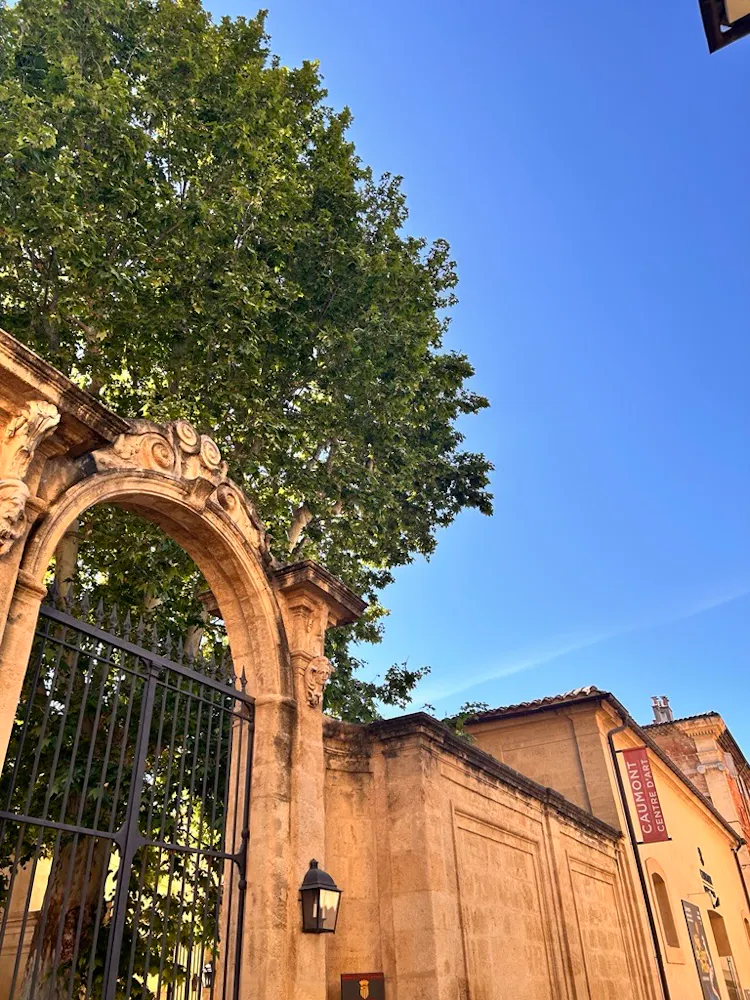
Lunch is served at Café Caumont, either in the ground-floor salons or on the terrace overlooking the formal French garden.
The menu favours light, refined dishes, including salads, seasonal specialities and pastries. A simple yet elegant pause in the setting of an 18th-century townhouse.
After lunch, a screening of the film devoted to Cezanne and the Aix region revisits the principal places and landscapes associated with his work.
Afternoon at the Jas de Bouffan Estate
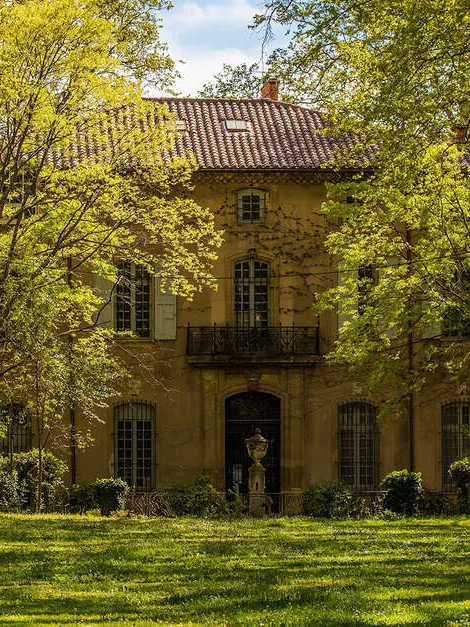
The final visit is devoted to Jas de Bouffan, the Cezanne family home for nearly forty years.
It was here that the artist created some of his first major compositions and repeatedly painted the estate’s trees, pathways, pond and surrounding landscapes.
The site reveals how his work developed through the repeated observation of the same motifs.
After the reflections of the Sorgue and the colours of Saint-Rémy, the journey concludes at the estate where Cezanne gradually gave the landscape a new sense of structure.
At the end of the visit, a private transfer will take you to Aix-en-Provence TGV station.
From the shifting light of the Sorgue to the lines of Mont Sainte-Victoire, this itinerary traces a major evolution in painting.
The Impressionists placed light and the fleeting moment at the heart of their work. Van Gogh embraced this freedom and gave colour a more expressive dimension. Cézanne continued to study the landscape, while organising forms and volumes in an entirely new way.
Through their work, Provence became a place of artistic experimentation and one of the birthplaces of modern painting.
*The “from” price shown is indicative and covers accommodation only. It is based on the rate available on 29 July 2026 for a stay from 18 to 20 September 2026 in a Superior Room at the various properties featured in the itinerary and bookable through the Esprit de France website.
Published on 05/08/2026