
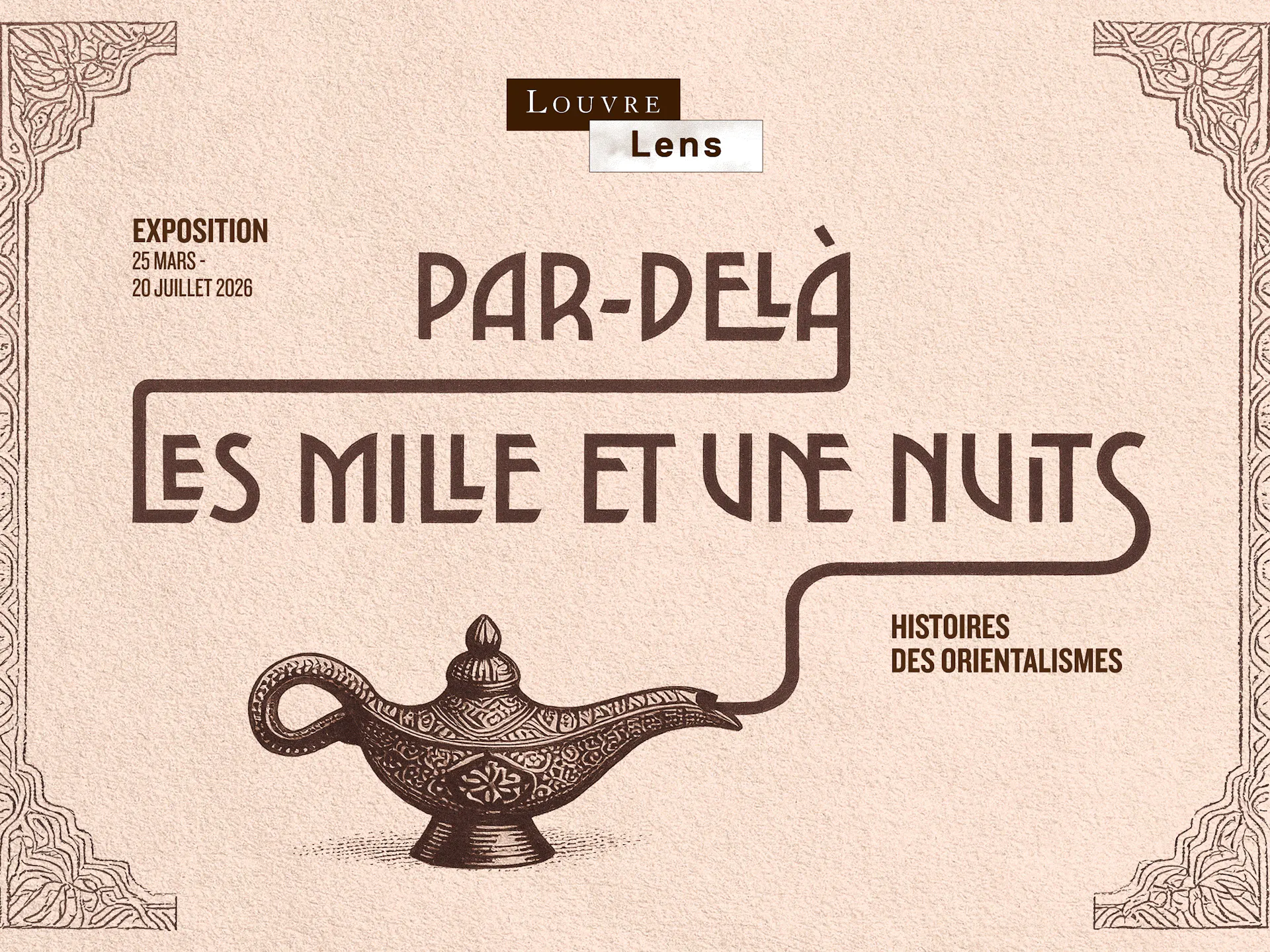
Culture
Beyond the Thousand and One Nights: Histories of Orientalism: An Orient Between Splendor and Mirage at the Louvre-Lens
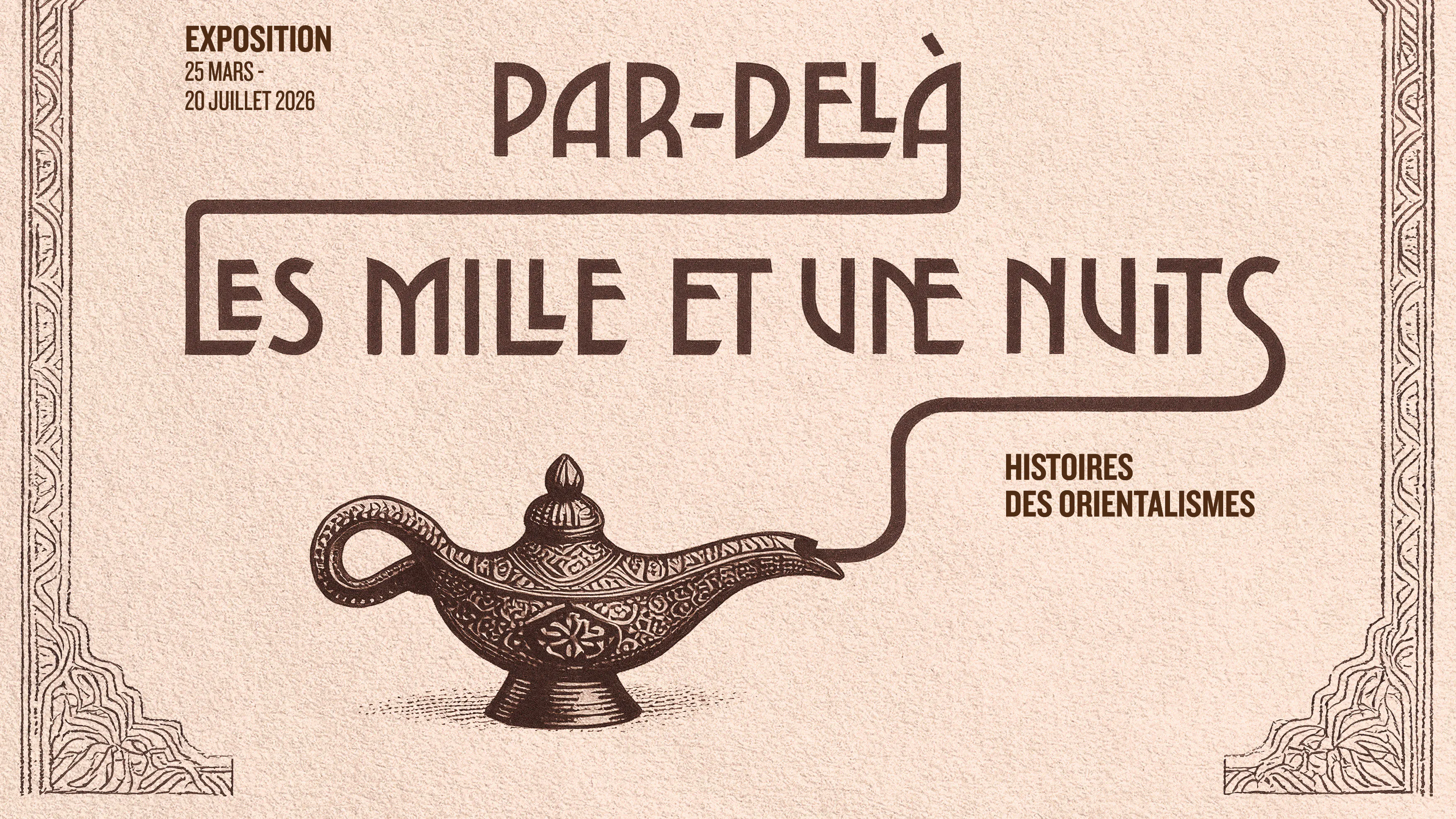
From the tales of the Thousand and One Nights to the vestiges of a mercantile past, Orientalism fascinates as much as it invites critique, oscillating between an enchanting imagination and a problematic gaze. Across the ages, it evolves—from precious to familiar, from idyllic to controversial—unfolding a multifaceted vision of a richly layered culture. Through art and storytelling, it reflects a past that is by turns commercial, artistic, and even sultry. These are the dialogues that take shape at the heart of the exhibition at the Louvre-Lens, on view until July 20, 2026.
There is, in certain exhibitions, a quiet invitation to shift one’s perspective—not to travel far, but to see differently. With Beyond the Thousand and One Nights: Histories of Orientalism, the Louvre-Lens offers precisely that: a journey through images we think we already know, only to rediscover them as the visit unfolds.
At first glance, everything feels familiar. The exhibition brings together illuminated manuscripts, works from the arts of Islam, textiles, and 19th-century Orientalist paintings—pieces that have helped shape an image of the Orient defined by light, refinement, and storytelling. One immediately recognizes this world, nourished by the Thousand and One Nights, travel narratives, and academic painting, and that sense of familiarity makes entering the exhibition feel almost effortless.
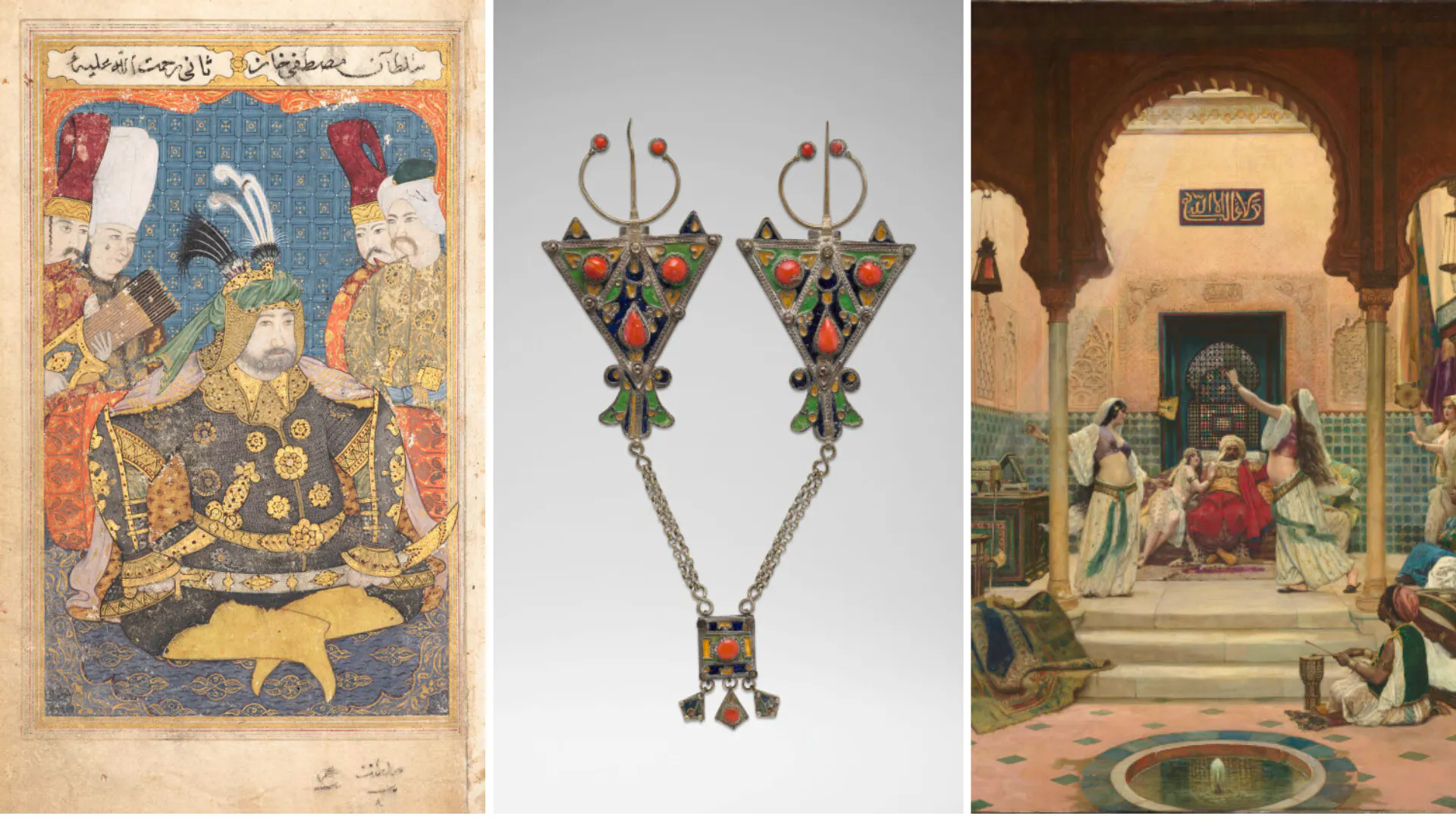
1- Portrait posthume de Mustafa II en armure, Levni, Abdülcelil Celebi, après 1703, Musée du Louvre, département des Arts de l'Islam © Musée du Louvre, Dist. GrandPalaisRmn - Raphaël Chipaul 2- Fibules et parure pectorale, milieu du 19e siècle, Musée du quai Branly – Jacques Chirac, ©musée du quai Branly - Jacques Chirac, Dist. GrandPalaisRmn - Pauline Guyon 3- Les Almées, Paul Bouchard, vers 1893, France, Paris, vers 1893, huile sur toile, H. 161 ; l. 133 cm, Paris, musée d'Orsay, RF 1977 93, don André Bouchard, 1961 © GrandPalaisRmn (musée d'Orsay) / Hervé Lewandowski
Then, gradually, the gaze begins to shift. The exhibition does not seek to abruptly dismantle this imaginary world, but rather to reveal how it was progressively constructed. Across the centuries, translated narratives, literary sources, commercial exchanges, and artists’ perspectives have shaped an image of the Orient that is never fixed, but constantly reimagined.
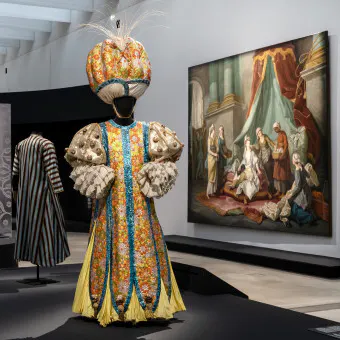
What we see, then, is not a faithful “elsewhere,” but a succession of layered interpretations.
The exhibition highlights a wide range of ensembles. The arts of Islam bear witness to real exchanges across the Mediterranean world—of skills, practices, and objects rooted in specific contexts. In contrast, 19th-century Orientalist paintings follow a different logic: that of staging and projection, where the Orient becomes a setting, an atmosphere, or an imagined space. The exhibition brings these two bodies of work into dialogue without setting them in direct opposition, instead allowing their differences to emerge.
It is within this interplay that the exhibition’s narrative takes shape, with a quiet clarity. The works are never detached from the context in which they were received, and one gradually understands how an imaginary was formed—drawing from multiple sources—before spreading and evolving, continuing to inform certain contemporary representations today.
The scenography supports this movement with restraint. It allows the works to breathe, organizes connections without imposing an overly prescriptive path, and gives visitors the freedom to move between forms and periods that echo one another.
What ultimately remains is that subtle tension between the apparent clarity of the images and an awareness of their construction, between the immediate pleasure of looking and the distance the exhibition gradually introduces—without ever disrupting the experience.
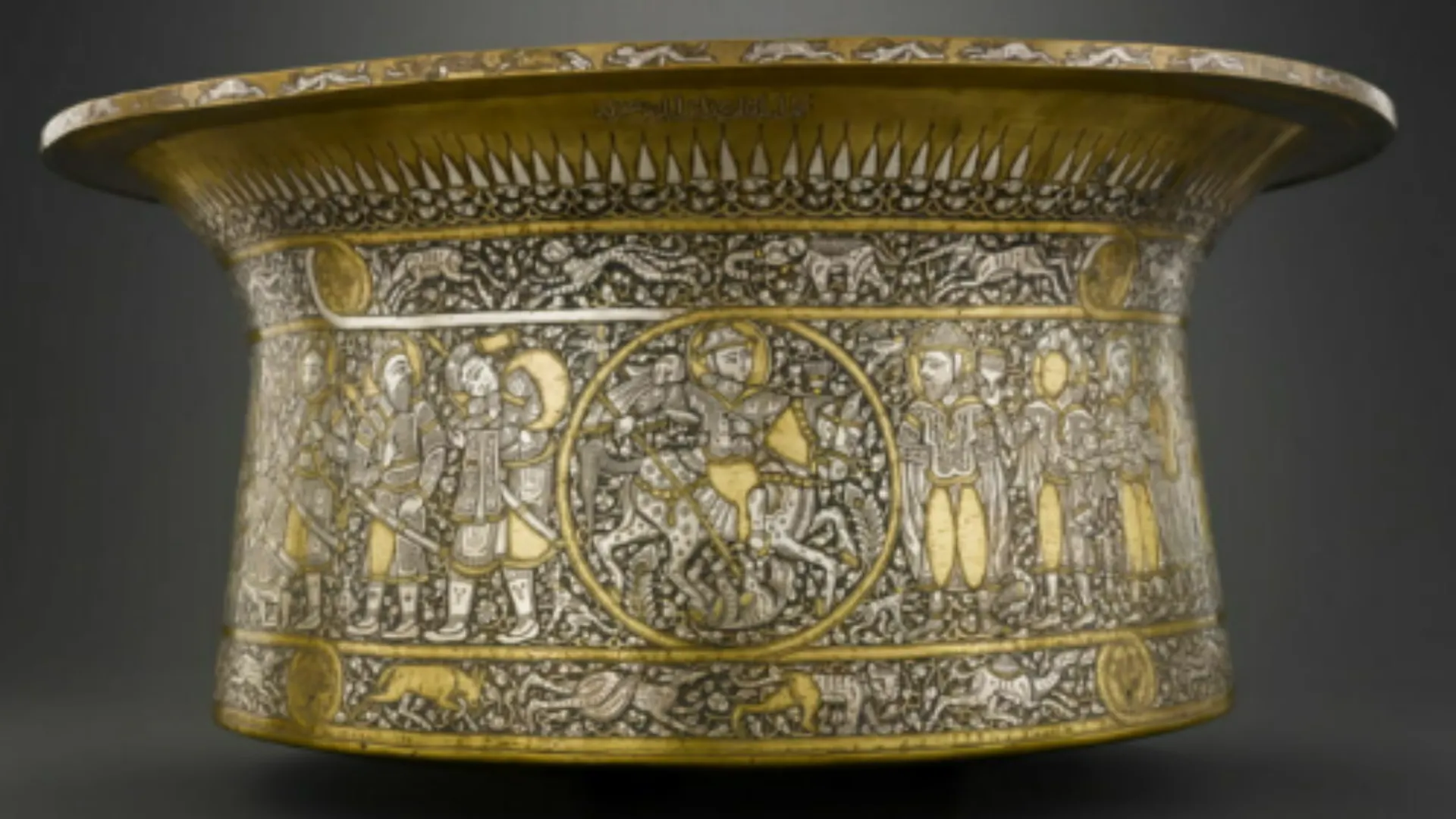
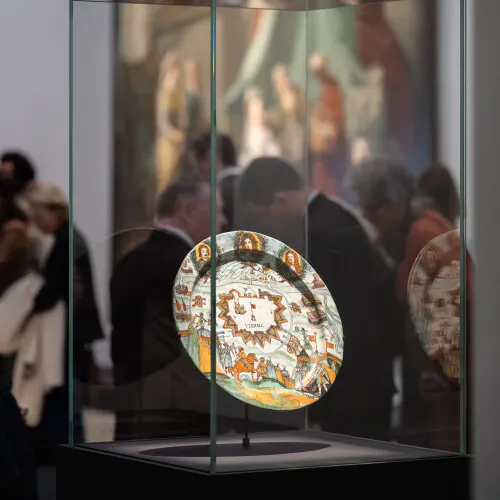
Bassin dit Baptistère de Saint-Louis_14e s.-Muhammad ibn al-Zayn © Musée du Louvre, Dist.GrandPalaisRmn-Hughes Dubois
Published on 30/04/2026